
Texts for the exhibition in English part 15-22
15. Training ships København and Danmark
15.1. Training Ship København
- 5-masted bark
- Built 1921 Ramage & Ferguson in Leith, Scotland
- Tonnage 3910 BT
- Length 132 m
- Width 15 m
- Draught 9 m
- Mast height 49 m
- Sail area 43 sails, 4644 m² – 3 times the sail area of the training ship Danmark
- Engine B&W 508 hp
The training ship København was built for ØK. It was a prestige project, and ØK founder H.N. Andersen was deeply involved in the project. It was the world’s largest sailing ship. ØK’s and all of Denmark’s pride. It sailed for 8 years. On 14 December 1928, København sailed from Buenos Aires bound for Adelaide, Australia, with 60 men on board, 45 of whom were trainees. The last contact with the ship was on 22 December 1928, when the crew routinely reported by radio that they had covered 1,100 nautical miles. Nothing more was heard from København. Despite an extensive search from February to September 1929, no trace of the ship was found then or since. The loss of København remains a mystery. It is believed the ship struck an iceberg. Another possibility is that it was caught in a storm while under sail.
The loss reportedly deeply affected H.N. Andersen. When it became clear that København was lost, H.N. Andersen initiated the building of a new training ship, the training ship Danmark.
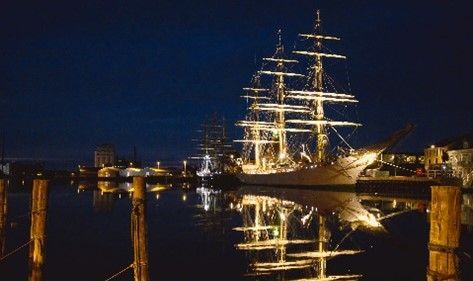
15.2. Training Ship Danmark
- 3-masted full-rigged ship
- Built 1933 at Nakskov Shipyard
- Tonnage 790 BT
- Length 65 m
- Width 10 m
- Draught 5 m
- Mast height 39 m
- Sail area 26 sails, 1632 m²
- Engine Frichs diesel engine 600 hp
The ship was built to train sailors for the Danish merchant fleet and has always been used as a training ship. Each year, the training ship trains 80 young people as ordinary seamen. The trainees are on a voyage for 3-5 months. During port stays, especially abroad, the ship, crew, and trainees act as ambassadors for Denmark and the maritime industry, and open ship and receptions are often held on board.
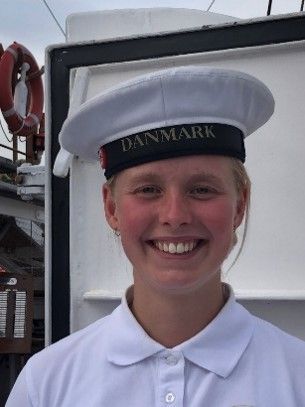
15.3. Kirstine – Training ship trainee
©Anna Arnecke
It was spontaneous that I became a trainee on the training ship; I had never sailed before. I had finished HF (Higher Preparatory Examination) and had no plans. My mother mentioned the training ship, so I read about it, and it sounded fantastic: the camaraderie, the full-rigged ship, surreal. I applied and was accepted.
I’ve become passionate about sailing. I can’t see myself sailing on tankers or container ships; I don’t want to enter the maritime industry on large ships. I’d rather sail on small ships, preferably a schooner, where I can give guests an experience.
Onboard the ship, we are divided into four berth deck groups, with 16 people in each. We operate on a 4-day rotation. Night watch every night from 18-22; 22-2; 2-4, 4-6 in rotation.
Day 1: 8 people are responsible for cooking, laundry, and cleaning. The other 8 people have the sailing watch. You muster in harness, ready to go “aloft”, i.e., set sail.
Day 2: Maintenance. Painting – I have painted the ship’s side, lowered in a dinghy – chipping rust, tarring, sanding blocks, polishing brass.
Day 3 and 4: We have lessons. We learn about engines and engine technology; safety OSWE (chemicals, spills, use of hazardous tools (work environment); navigation, plotting position, signal flags, day signals, buoys, as well as knots and splicing. The training ship always has a doctor on board who teaches us first aid. All lessons are conducted in English.
Before joining the ship, there are 2 months of training on land. Firefighting; radio; sea rescue in the swimming pool, practical skills.
You can join the training ship after finishing compulsory school. You must write your application in English and give a five-minute presentation in English during the application process.
We sleep in hammocks; it’s my best friend. You adjust the hammock, it takes about a week. Then you sleep wonderfully. I have a locker and a bit of space in a chest bench. I have toiletries, nightwear, and underwear with me, that’s all. The rest of the clothes and shoes are provided. I also have a mobile phone, but it’s only allowed during shore leave.
The first time I had to go up the mast, I felt quite safe because we have harnesses on, but my heart was pounding fast; it was nerve-wracking. But I’m not afraid of heights. Before you are allowed to go up, you must show that you can do two pull-ups. Partly to pull yourself up, partly because the sails are heavy to reef.
Sailing with the training ship is fantastic! After the first month, when routines are in place, I enjoy it. Feeling the wind, being under sail. It’s wonderful people who respect each other and their boundaries.
©Brian Lilja Wendt
16. Jutlandia
16.1. Jutlandia – Liner Ship
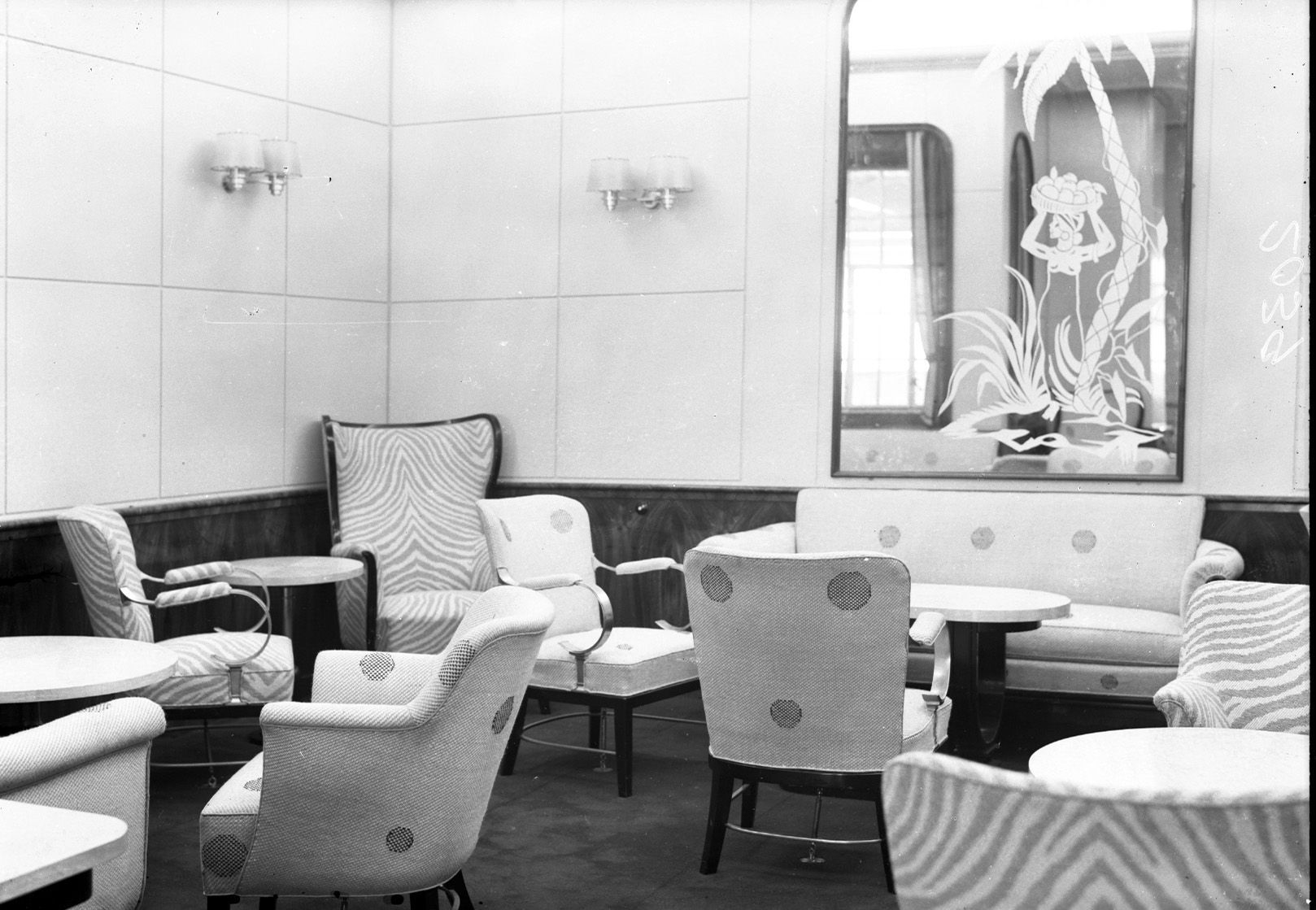
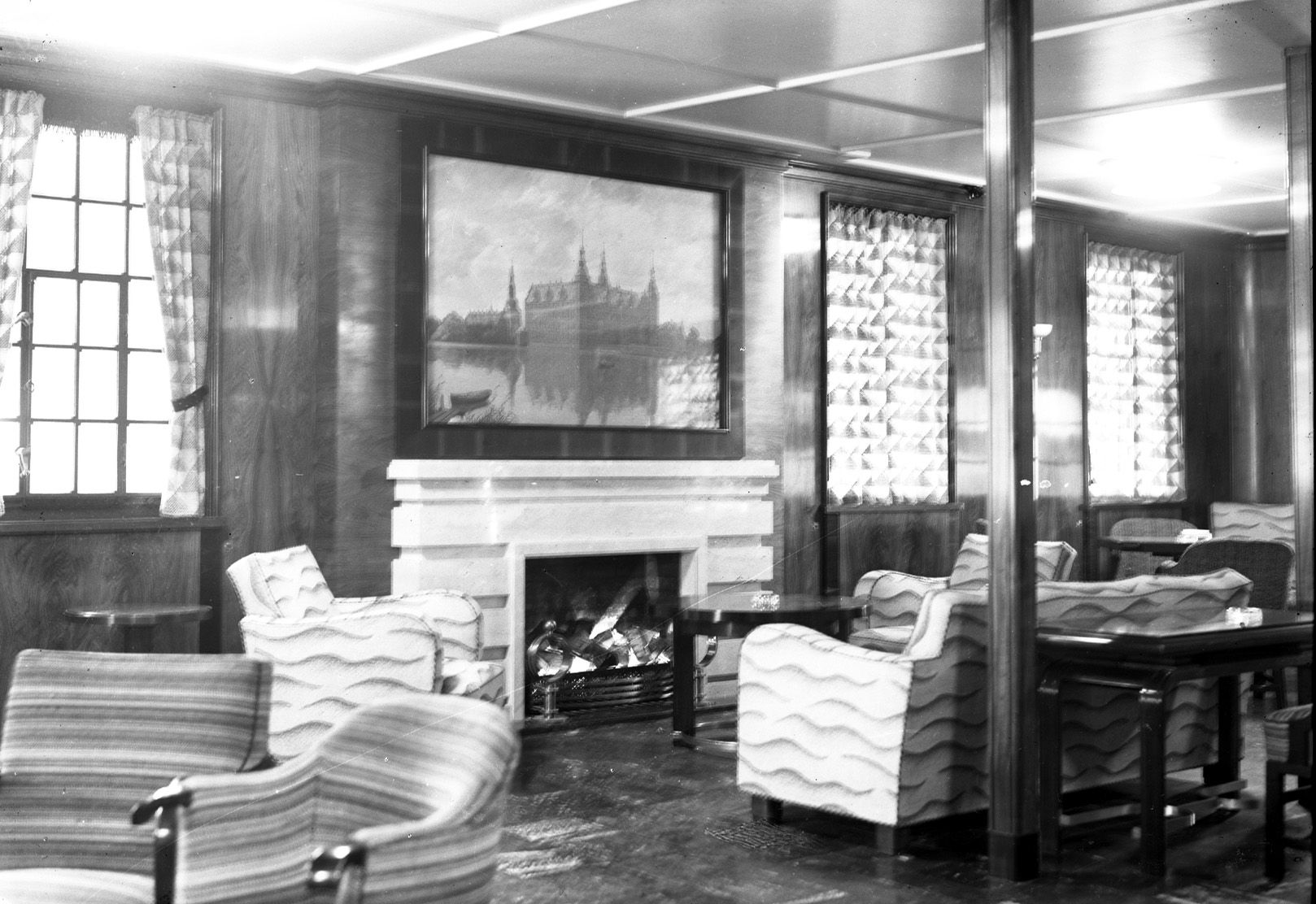
Jutlandia was built at Nakskov Shipyard and was delivered to ØK in 1934, where the ship was put into service on the liner route between Copenhagen and Bangkok. Jutlandia was a combined passenger and cargo ship.
©Historiens Hus Nakskov
©Historiens Hus Nakskov
Passengers travelled in luxurious conditions, as seen in the ship’s salons.
16.2. Jutlandia – Under attack, 3 May 1945
On 1 April 1940, Jutlandia sailed to Nakskov for routine maintenance. Jutlandia was in dry dock at Nakskov Shipyard when Germany occupied Denmark on 9 April 1940. The Germans did not seize Jutlandia, and the ship was laid up in Møllebugten in Nakskov for most of the war. Towards the end of the war, it was deemed safer to move Jutlandia to Slotø, where it was laid up together with the ships Java and Falstria. All three ships had only a few crew members on board to take care of their maintenance.
On 3 May 1945, at 17:00, an aircraft attack group took off from the Royal Air Force base in Langham, England. The group consisted of British-built Beaufighters escorted by 12 American-built Mustang fighter planes. The aircrafts reached the west coast of Jutland at 19:05. They attacked German submarines and German war and merchant ships in Danish waters. At 19:38, the aircrafts reached The Great Belt, turned south, and arrived at Nakskov Fjord a little before eight o’clock.
The aircraft observed Java, Falstria, and Jutlandia anchored at Slotø and assessed them to be enemy ships. The planes flew over Slotø and attacked the ships with 20 mm high-explosive incendiary shells, 25 mm air-to-ground rockets, and 20 mm armour-piercing quick-firing guns. The pilot leading the bombing raid was Danish Jørgen Kjeldbæk, a former ØK employee. Kjeldbæk realised the mistake – the ships were not German – and averted the following attack from the other side of the fjord. Java, anchored closest to shore, was hit the hardest and sank. Falstria and Jutlandia were less severely damaged.
In the engine room on Java, five men were playing cards when a shell whizzed through the room and sliced the card table in half, injuring two men. The officers’ mess was hit, and first mate Edmund Christensen was severely injured. None of those on board were killed, but five people had to be hospitalised in Nakskov.
First mate Christensen’s wife, Jenny, was in a bomb shelter in Nakskov with their two children. Hearing the explosions, she had a terrible feeling that her husband was injured.
The farm on Slotø was also hit, caught fire, and had to be evacuated.
On the way home, the aircraft were fired upon by anti-aircraft guns in Jutland. Three Beaufighters were hit but made it back to base. One Beaufighter and one Mustang fighter crashed into the North Sea, but all the crew were rescued by Danish fishing boats.
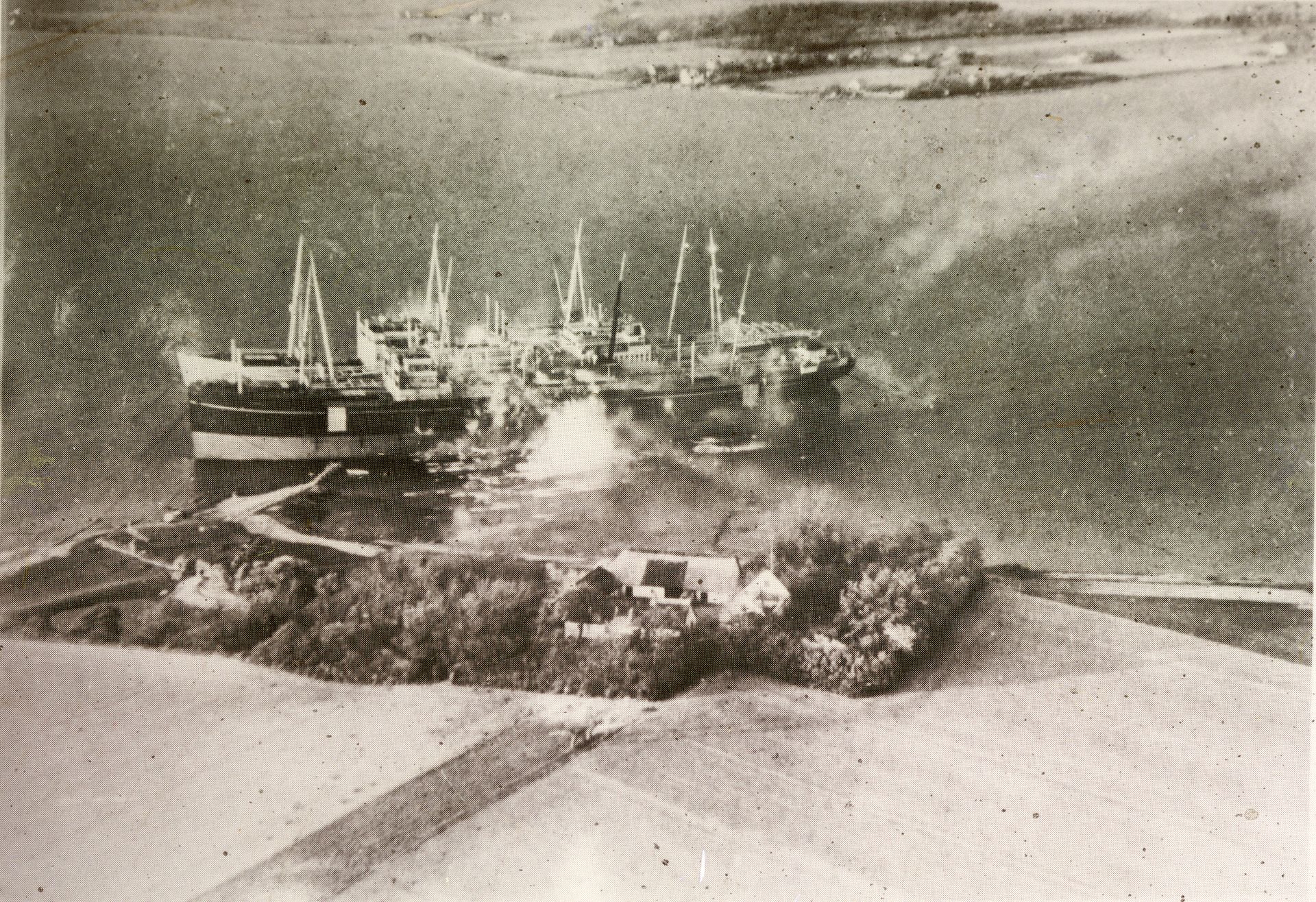
Photo from the cockpit of an attacking RAF aircraft
©Historiens Hus Nakskov
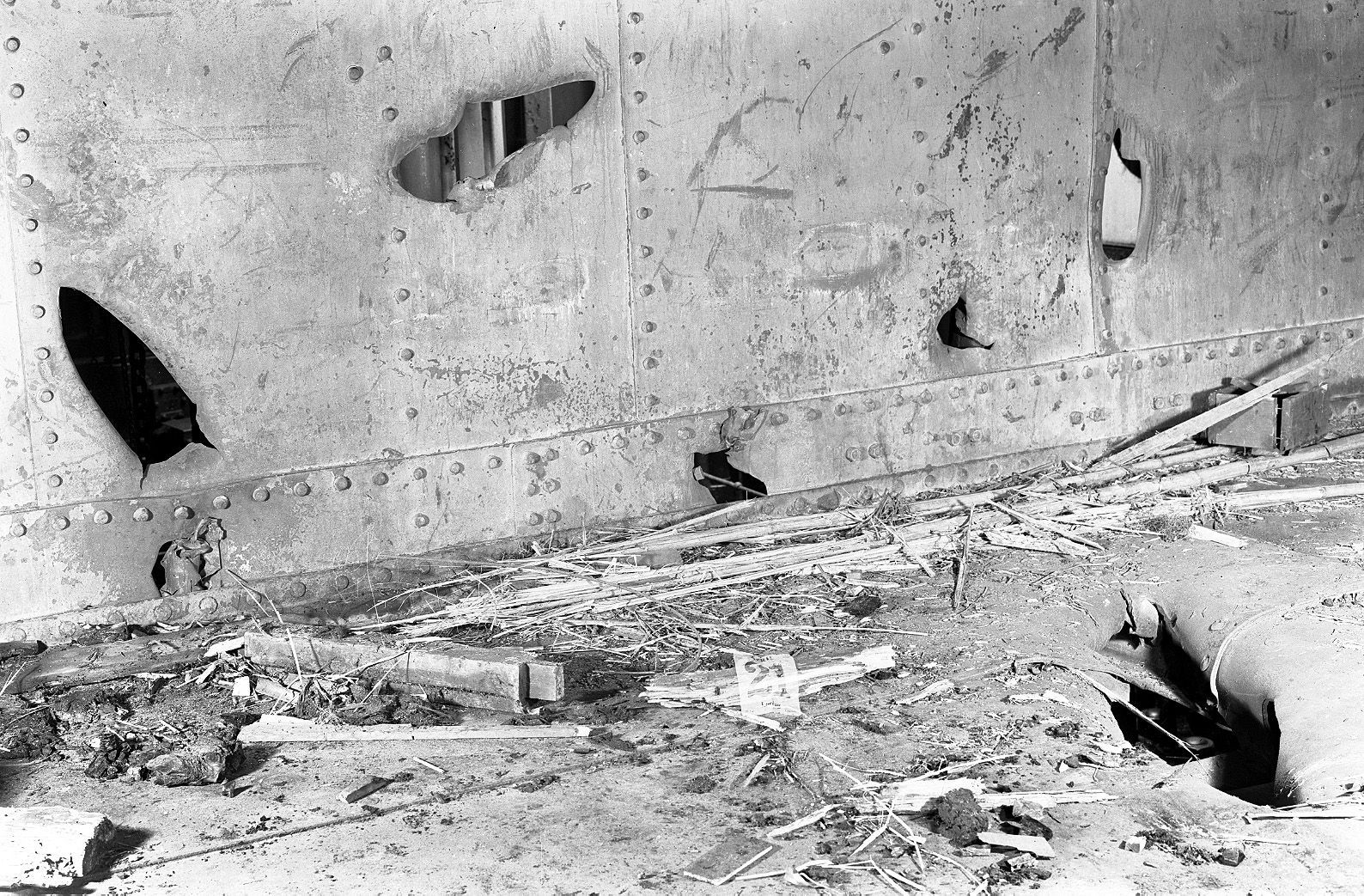
Damage to the ships
©Historiens Hus Nakskov
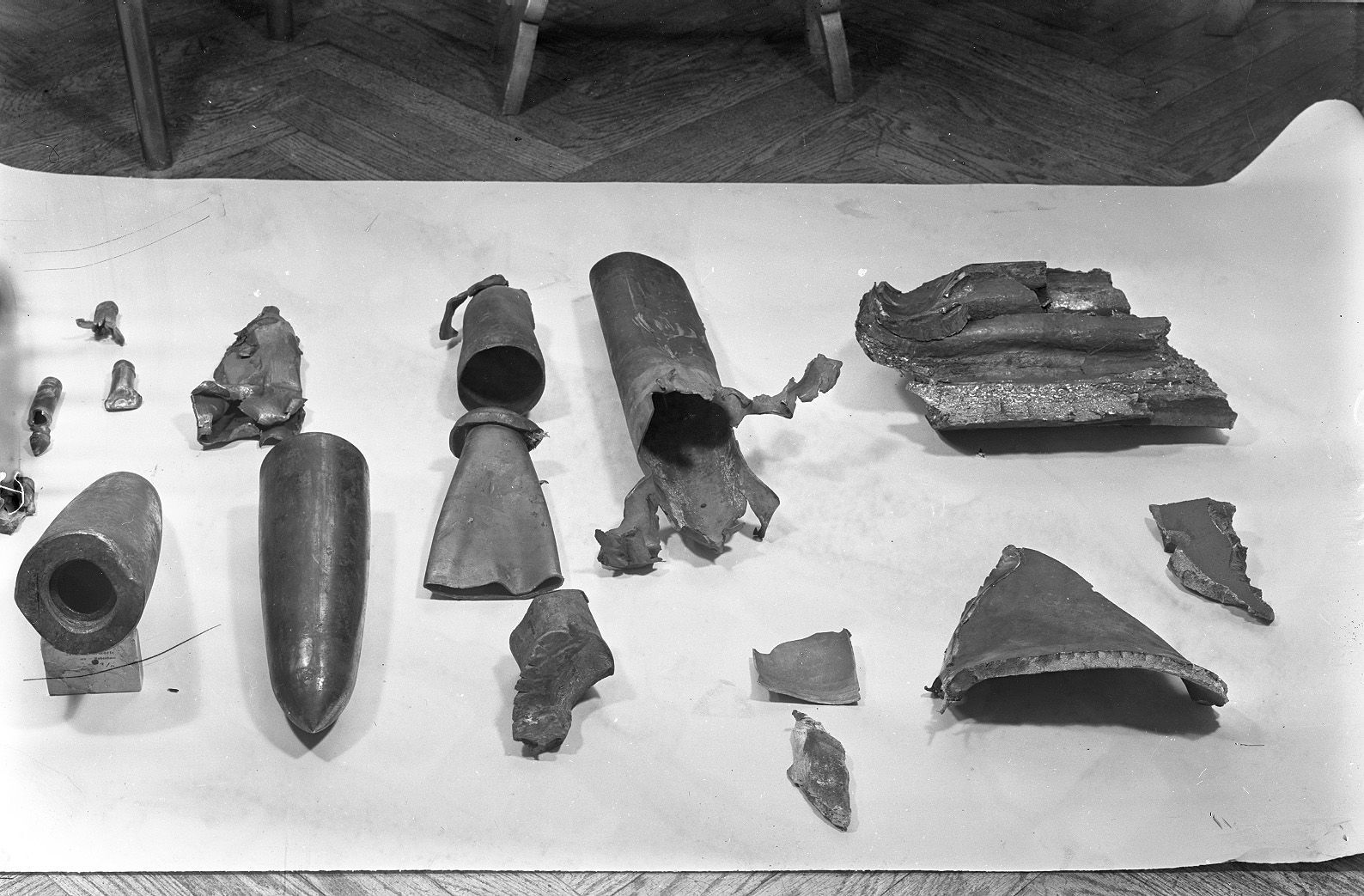
Remains of ammunition used in the attack
©Historiens Hus Nakskov
16.3. The Korean War
Japan occupied Korea in 1910. On 8 August 1945, the Soviet Union declared war on Japan and entered Korea from the north. Japan surrendered on 15 August, and World War II ended. Soviet troops occupied the northern part, and the USA occupied the southern part of Korea. The country was divided along the 38th parallel. Negotiations at the UN for the reunification of Korea failed, and in 1948 South Korea and North Korea were established.
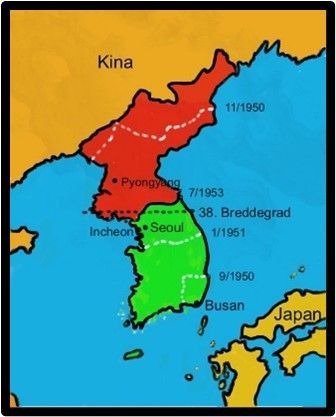
©Anna Arnecke
On 25 June 1950, 75,000 North Korean troops crossed the border into the south. South Korea was overrun, and North Korea occupied most of South Korea. Only a small enclave around the port city of Busan held out.
The UN launched a counterattack. The USA deployed troops and pushed the North Koreans back. Most of Korea came under UN control.
China entered the war on North Korea’s side, forcing the UN into retreat. The front stabilised around the 38th parallel. The front moved only a few kilometres over the next two years, and on 27 July 1953, an armistice agreement was signed. A peace treaty has not yet been concluded.
The Korean War was the first major conflict of the Cold War. Communist North Korea, supported by the Soviet Union and China, against South Korea, supported by the USA, Britain, and UN countries. Between 3-4 million people died, including approx. 2 million civilians.
16.4. Jutlandia – Hospital Ship
Denmark was asked by the UN to participate in the Korean War. Denmark was very cautious because we wanted to maintain a tolerable relationship with the Soviet Union, so instead of military assistance, we offered a hospital ship.
The state leased Jutlandia from ØK. The ship sailed to Nakskov in October 1950 to be converted into a hospital ship. In just 12 weeks, the task was completed. In addition to the crew, there was now room for up to 300 patients and a medical staff of about 100 people. The doctors stayed in first-class cabins, and the nurses in tourist-class cabins, where the capacity was increased from two to four berths in each 15 m² cabin.
On the middle deck, where the cargo hold used to be, a hospital was set up. The hospital beds were hung to sway with the waves. There were three operating theatres, an X-ray department, a dental clinic, a pharmacy, and laboratories for clinical and bacteriological examinations. When Jutlandia sailed out of Nakskov Fjord again, it had been converted into an advanced hospital capable of performing the same operations as on land.
The Red Cross was to run the hospital and handle recruitment. On the first voyage, 42 nurses were needed. Over 3,000 applications were received, so there was fierce competition for the positions on board. Jutlandia was a prestige expedition, with access to the latest hospital equipment and the prospect of adventure. The Red Cross prioritised age and qualifications. The average age of the nurses was 35 years.
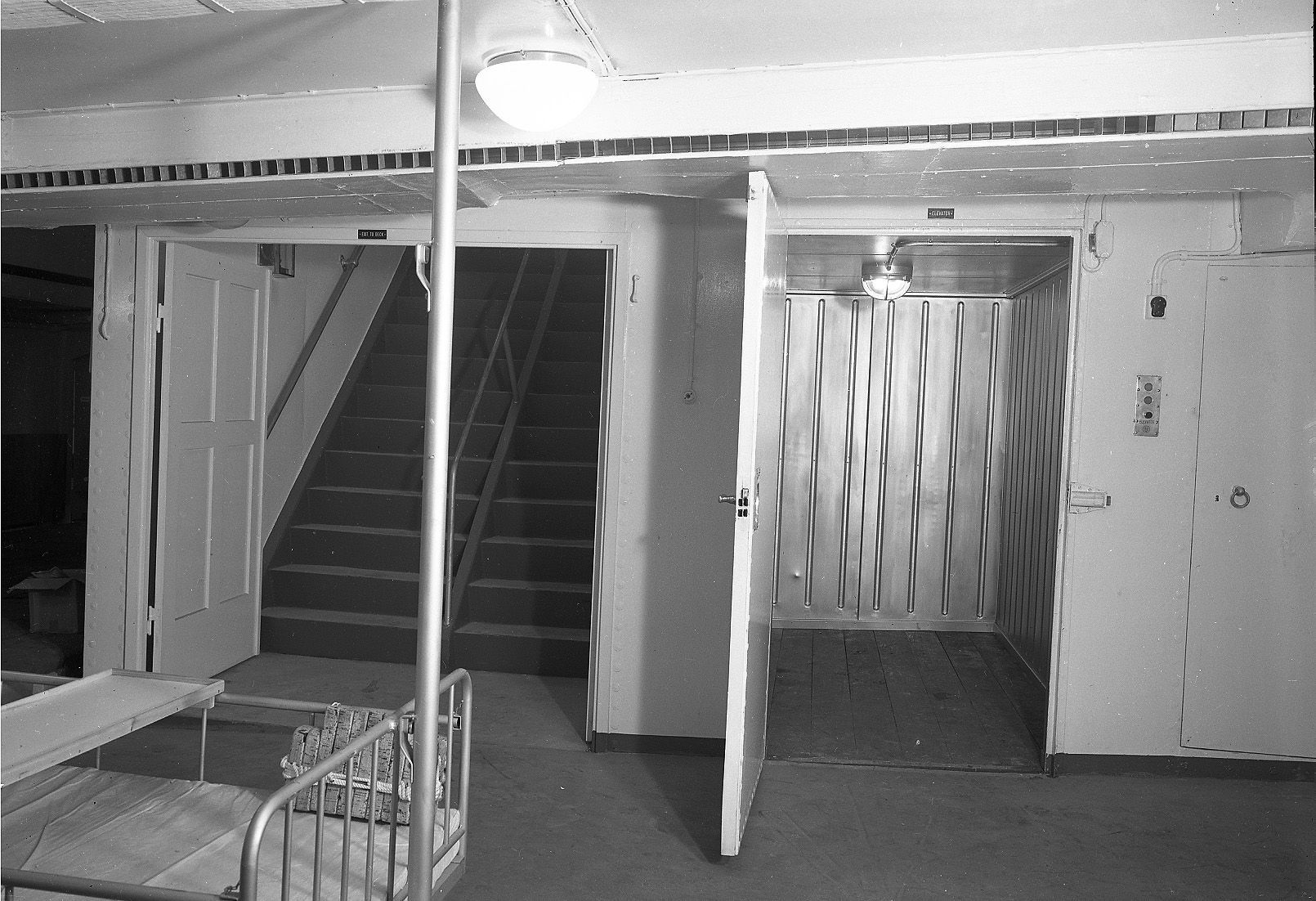
©Historiens Hus Nakskov
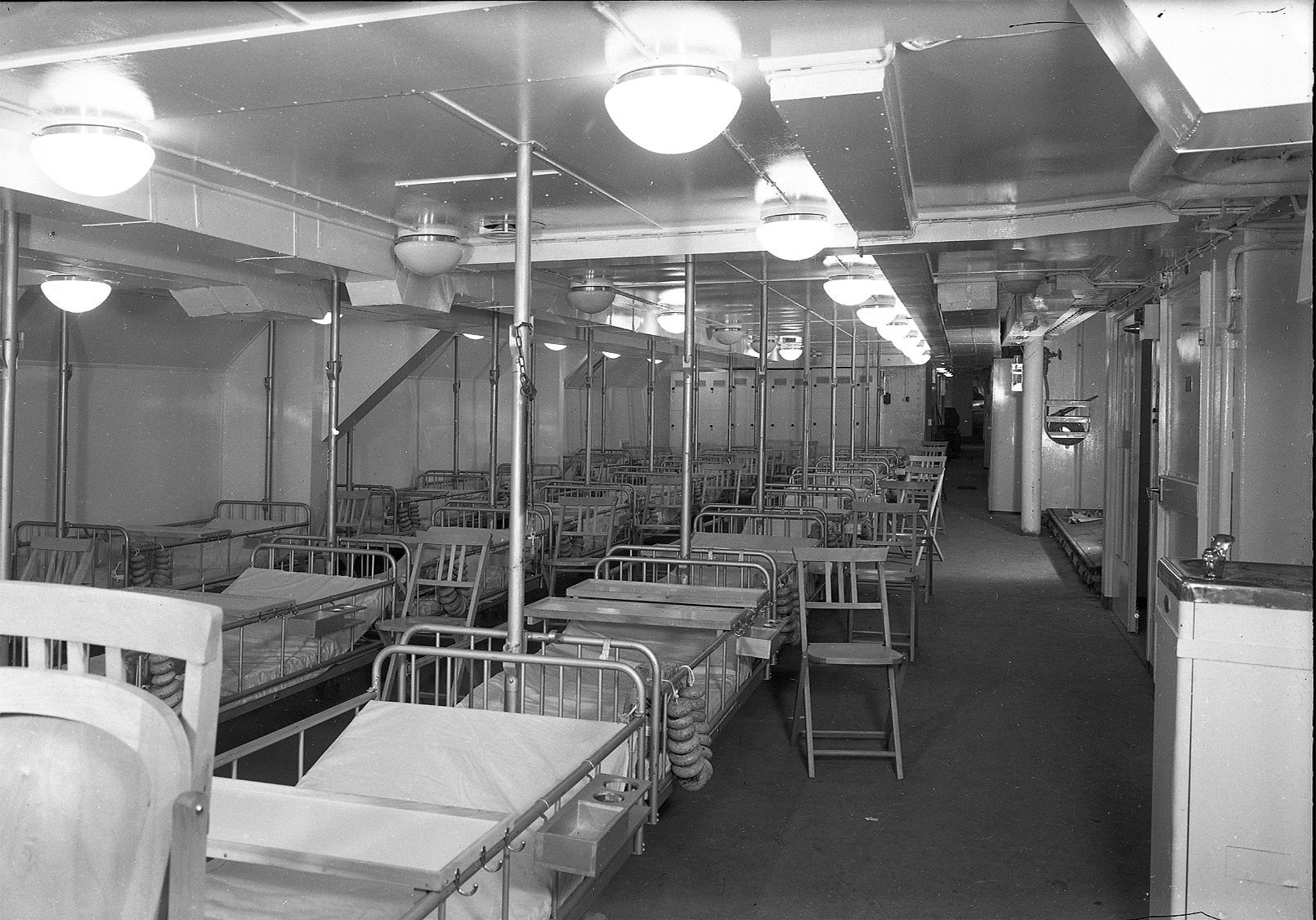
©Historiens Hus Nakskov
Patients were triaged on deck and transported by elevator to the wards.
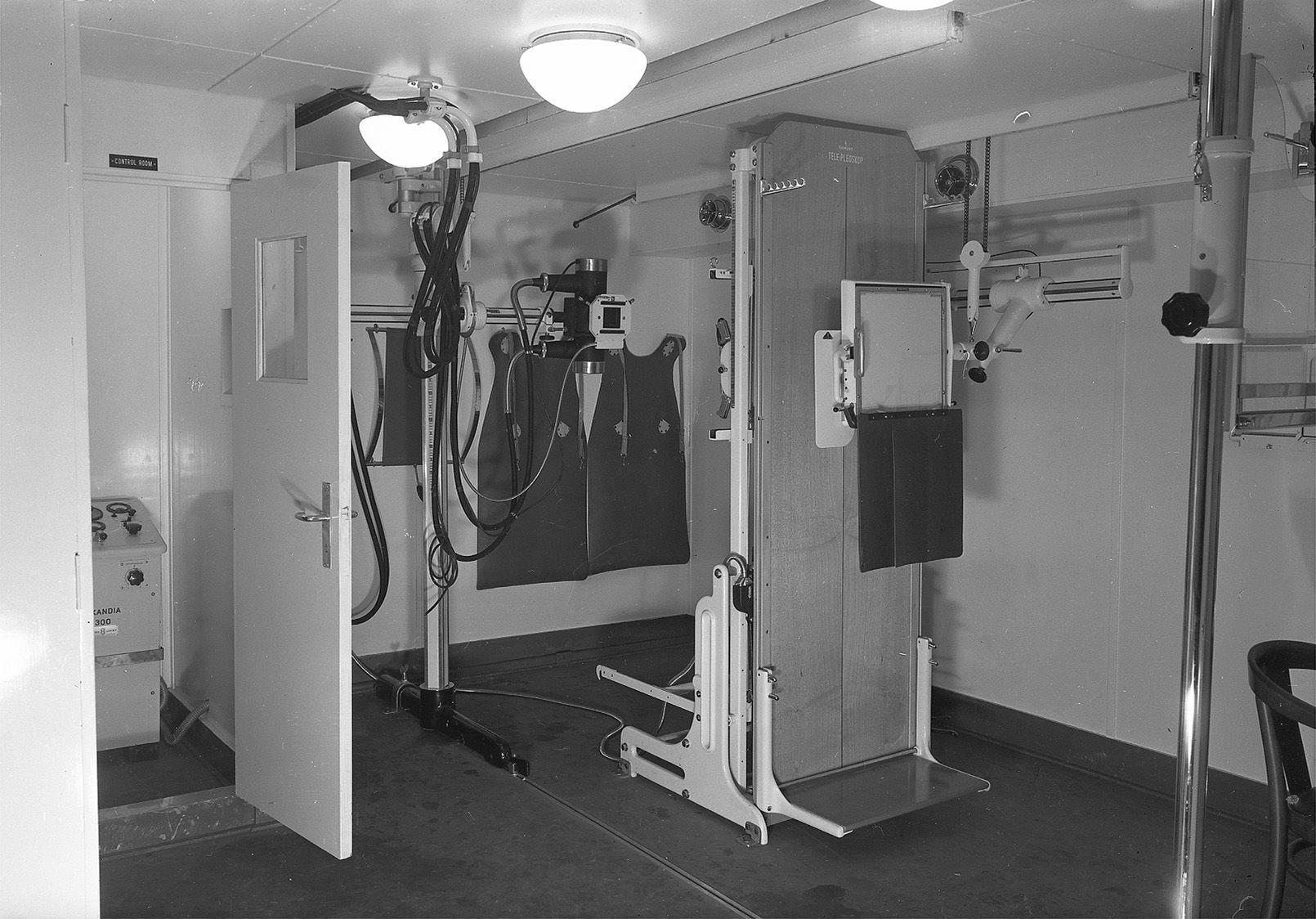
X-ray room
©Historiens Hus Nakskov
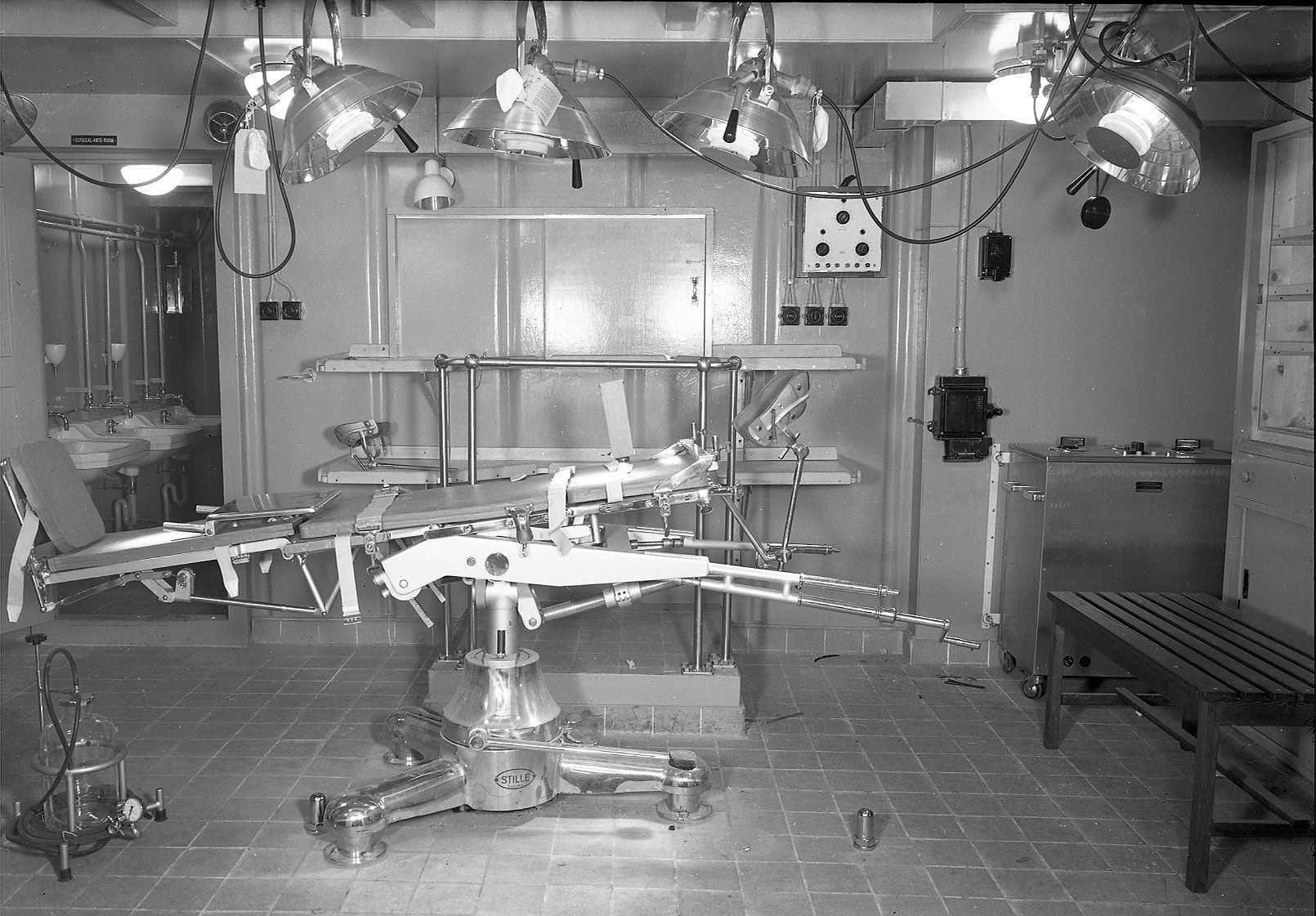
Operating theatre
©Historiens Hus Nakskov
16.5. Jutlandia in Korea
First Voyage
On 23 January 1951, Jutlandia departed. The ship sailed under three flags: the Danish national flag Dannebrog, the Red Cross, and the UN flag. Jutlandia began its service in Busan on 10 March 1951, about 200 km from the front. Depending on the war actions, there were between 100 to over 200 wounded UN soldiers on board.
Most of the time, there were vacant beds. The staff found it frustrating that they could not be used when they saw the plight of the civilian population. Unofficially, they helped the local population and even brought patients on board. In July 1951, Jutlandia received UN permission to treat civilians on the condition that civilians would be sent ashore if wounded soldiers arrived.
Jutlandia did not have air conditioning, and it became too hot to stay in Korea in the summer, so the ship returned as a hospital transport ship to Europe with 202 patients.
Second Voyage
Jutlandia sailed back to Korea in November 1951. It was now agreed that 100 beds were reserved for civilian Koreans. They helped where the need was greatest. The staff were so committed to the relief work that they often refused to take leave in Japan.
The Red Cross wanted wounded prisoners of war to be brought on board, as the Red Cross is impartial and helps all the wounded. The UN military leadership refused. Instead, some doctors went ashore and helped at hospitals that cared for the prisoners of war.
On 29 March, Jutlandia sailed to Japan and picked up 194 patients, who were transported to Denmark.
Third Voyage
In the summer of 1952, Jutlandia was at Nakskov Shipyard and had a helicopter deck installed. An eye clinic, ambulance motorboats, and air conditioning were also added.
Then Jutlandia sailed back to Korea, this time to the Incheon Bay, only 40 km from the front. The wounded soldiers now came directly from the front. The crew could see the artillery fire and therefore be prepared when the wounded arrived. The wounded were flown on board by helicopter so they could be treated within 20 minutes of being injured.
The proximity to the front and the many wounded soldiers meant that help to civilians was reduced. However, the crew helped set up a clinic on land to assist the civilian population.
March 1953 was the busiest month with 301 wounded, with 169 arriving within 3 ½ days. After that, things calmed down again. The war stalled, and an armistice was signed on 27 July 1953. Jutlandia became redundant and returned to Copenhagen, arriving on 16 October to a hero’s welcome after 999 days of UN service.
Much of the hospital equipment from Jutlandia was donated to The Scandinavian Educational Hospital in Korea, later the National Medical Center.
4,981 wounded UN soldiers from 24 nations and more than 6,000 civilian Koreans were treated on board Jutlandia.
16.6. Jutlandia as a Royal Yacht
In September 1960, ØK made Jutlandia available to the King of Thailand for King Bhumibol and Queen Sirikit’s official visit to Scandinavia. From Copenhagen, the royal couple travelled by Jutlandia to Oslo and Stockholm.
In 1963, Jutlandia was selected to take Crown Princess Margrethe on an official visit to the Far East. The Crown Princess visited Thailand, Malaysia, Cambodia, Hong Kong, and Japan.
16.7. Jutlandia – Decommissioning
Jutlandia returned to Copenhagen on 19 December 1964 from its last voyage to Bangkok. The ship was unloaded and decommissioned from ØK’s register. Jutlandia was scrapped in Bilbao, Spain, in 1965.
16.8. Lis Faurholt – Volunteer on a Hospital Ship
www.mercyships.dk
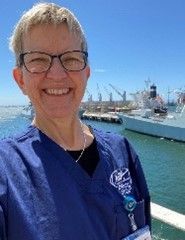
I have been a dental clinic assistant since 1989, and I have previously volunteered in Cambodia, where we treated street children and orphans. I am a volunteer with Tandrødderne in Ballerup, which offers free dental treatment to the socially disadvantaged. So, volunteering is not new to me; I believe it is important to help others if you can.
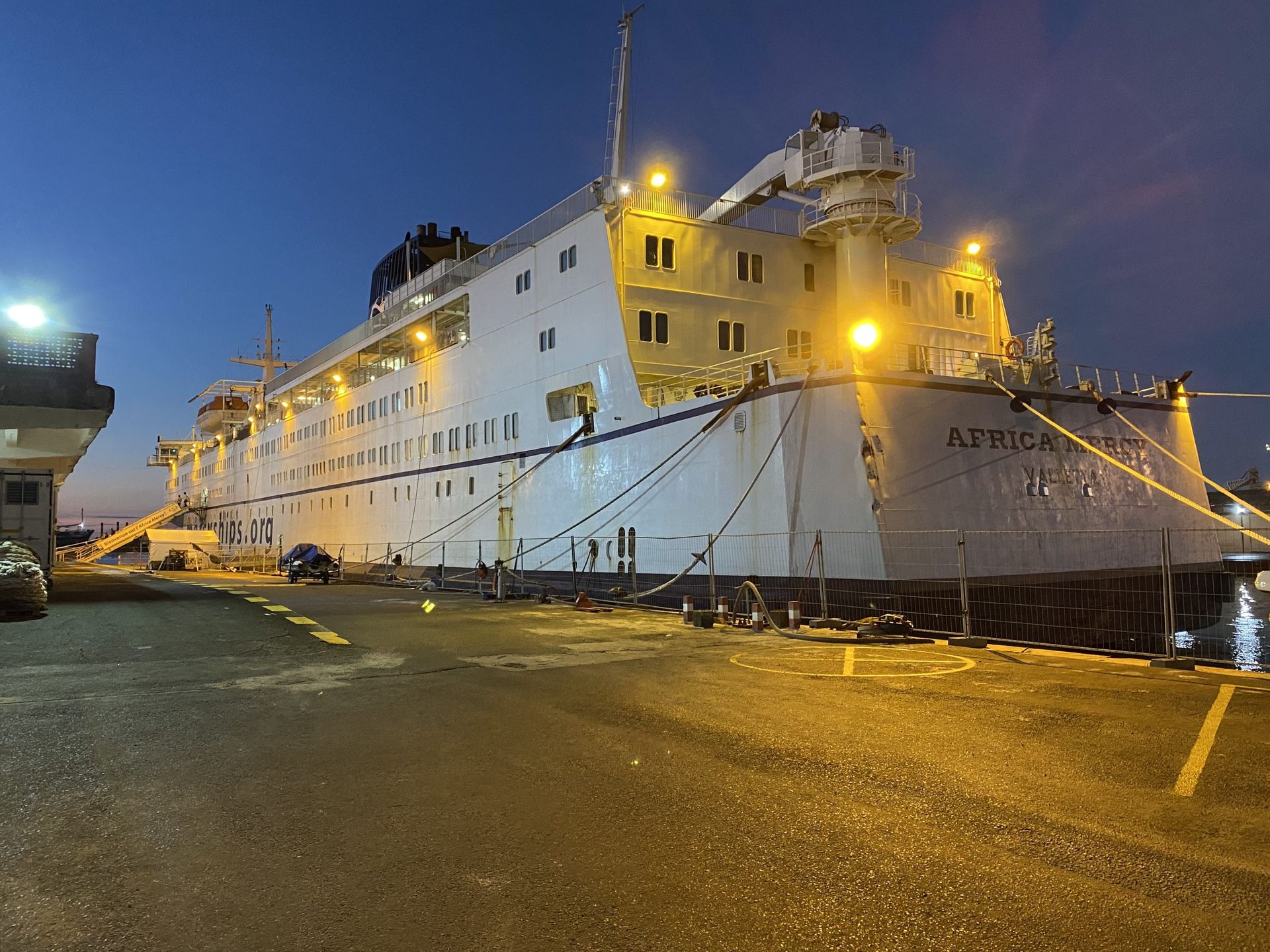
Africa Mercy is Denmark’s old Great Belt ferry, M/F Dronning Ingrid. After its last voyage in 1997, the ship was sold to Mercy Ships and converted into a modern hospital ship, which is partly why I am here. There are still some familiar features from back then. I have sailed many times on this ferry, as my parents lived in Southern Jutland and I in Copenhagen, so it brings back many memories from a bygone era.
Mercy Ships visit host countries in Africa south of Sahara, where up to 93% of the population has no access to or cannot afford surgery. Mercy Ships are always invited by the host countries, where there is a lack of the specialities that can be treated on board the ships.
Onboard the ship, surgeries are performed, including cleft lip and palate, children’s deformities, women’s birth injuries, plastic surgery for burns, eye surgery, and dental treatments.
We have two dental clinics where we treat patients, both those coming for surgery and their families, if they are with them. In the clinic, we have young local women who are indispensable; in addition to introducing them to the role of clinic assistant, they also act as interpreters. We have many locals working on board, who receive training.
Africa Mercy stays in the same port for 1-2 years at a time. We do not sail around to different places. It would take too long to prepare the ship to receive patients.
Everyone on Mercy Ships works for free and comes from over 50 different nations. You do not need a healthcare background to volunteer; there are many types of jobs on board. Everyone on the ship and in the host country works together to give new life to the patients on board.
www.mercyships.dk
17. Falster
17.1. N80 Falster
The minelayer Falster was built at Nakskov Shipyard in 1963.
Length: 76.94 m
Width: 12.80 m
Draught: 3.69 m
Speed: 17 knots
Crew: originally 120 men, from 1993, 74 men. As a training ship: 156 men.
Armament:
4 x 76 mm Machine Gun M/60 LvSa2
From 1986-93: 4 x 20 mm Machine Gun M/42 LvSa
From 1993: 1 x 76 mm Machine Gun M/60 LvSa2, 3 x Stinger Lv M/93, 4 x Seagnat/SBROC Mk. 36
Mines: 290 tons of mines (300-400, depending on type)
Decommissioned from the fleet in 2000 and scrapped in Hundested.
17.2 Sea Mines
A sea mine is an explosive charge laid in the water to damage or sink ships or prevent navigation in an area.
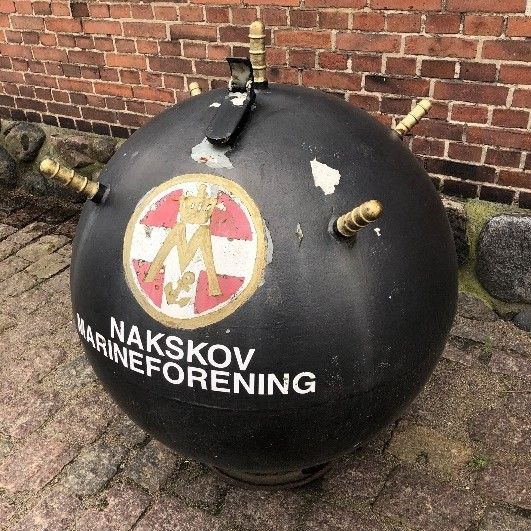
Horn mine (stands at the Harbour Building, Havnegade 2).
©Anna Arnecke
Sea mines are much larger than land mines. Sea mines can be triggered in different ways. Horn mines have small horns around the mine that trigger it if a ship hits them. A sea mine can also be magnetically triggered. Such a mine is not activated by direct contact with a ship, but when an iron ship passes over it, the mine can detect changes in the Earth’s natural magnetism and then be triggered.
Minelaying
The Falster-class minelayers were built for laying large numbers of sea mines. Four nearly identical minelayers were built for the Navy: N80 Falster, N81 Fyen, N82 Møen, and N83 Sjælland. The task of the Falster-class minelayers was to lay minefields, partly in connection with the anti-invasion defence of Denmark and partly as barriers to navigation. The Falster-class minelayers could carry about 300 mines at a time, and they could load mines in any port in just a few hours. To take on mines, the ship used four hydraulic cranes, each with a lifting capacity of up to 2 tons. For minelaying, the ship was equipped on the mine deck with four rail tracks and equipment for both automatic and manual laying of contact and distance mines. Within 24 hours, two Falster-class minelayers could close the Danish navigational waters of the Great Belt, Little Belt, and Øresund.
17.3. N80 Falster – Nakskov’s Adoption Ship
N80 Falster became Nakskov’s adoption ship in 1964.
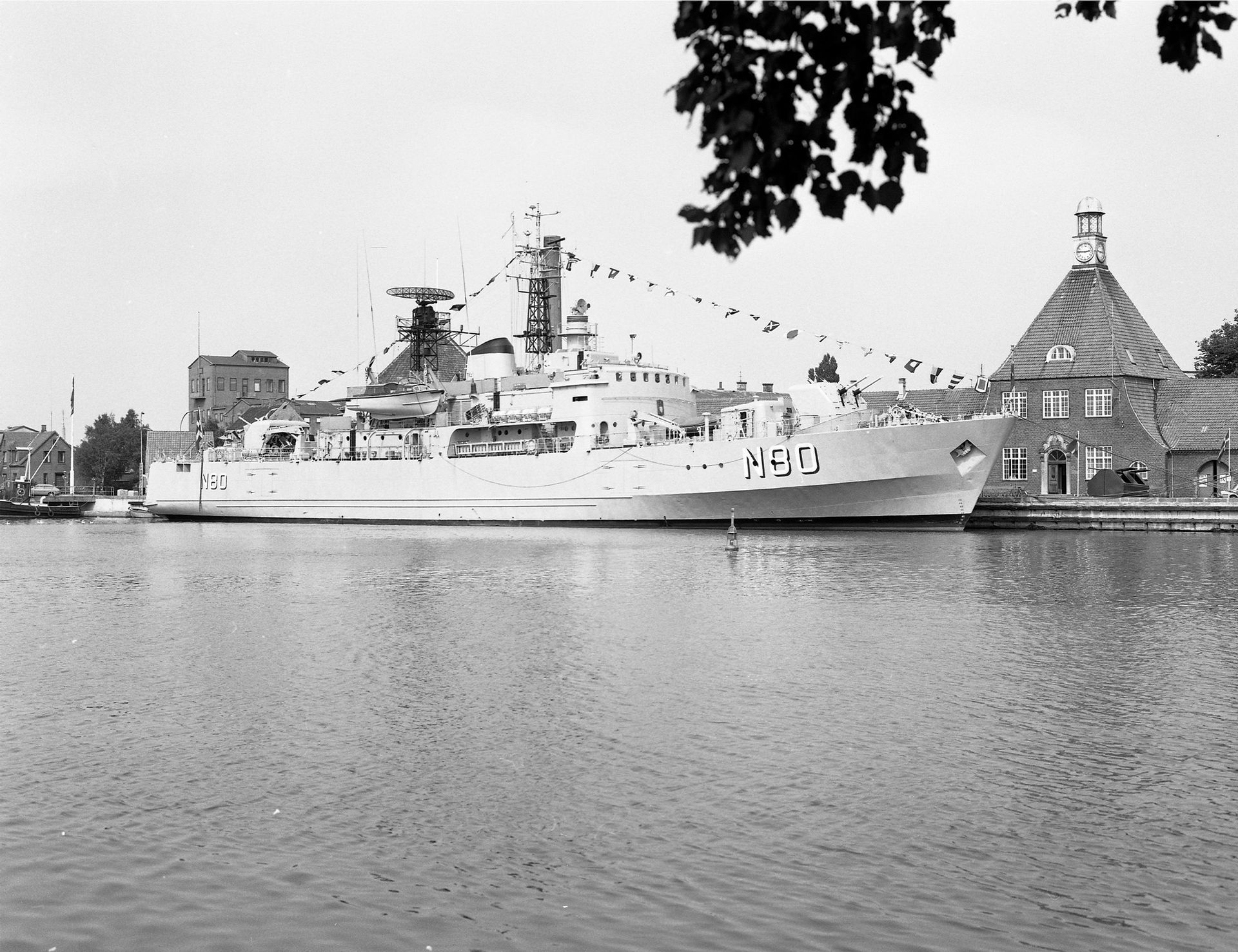
Here the ship is seen lying in front of the Harbour Building in Nakskov.
©Historiens Hus Nakskov
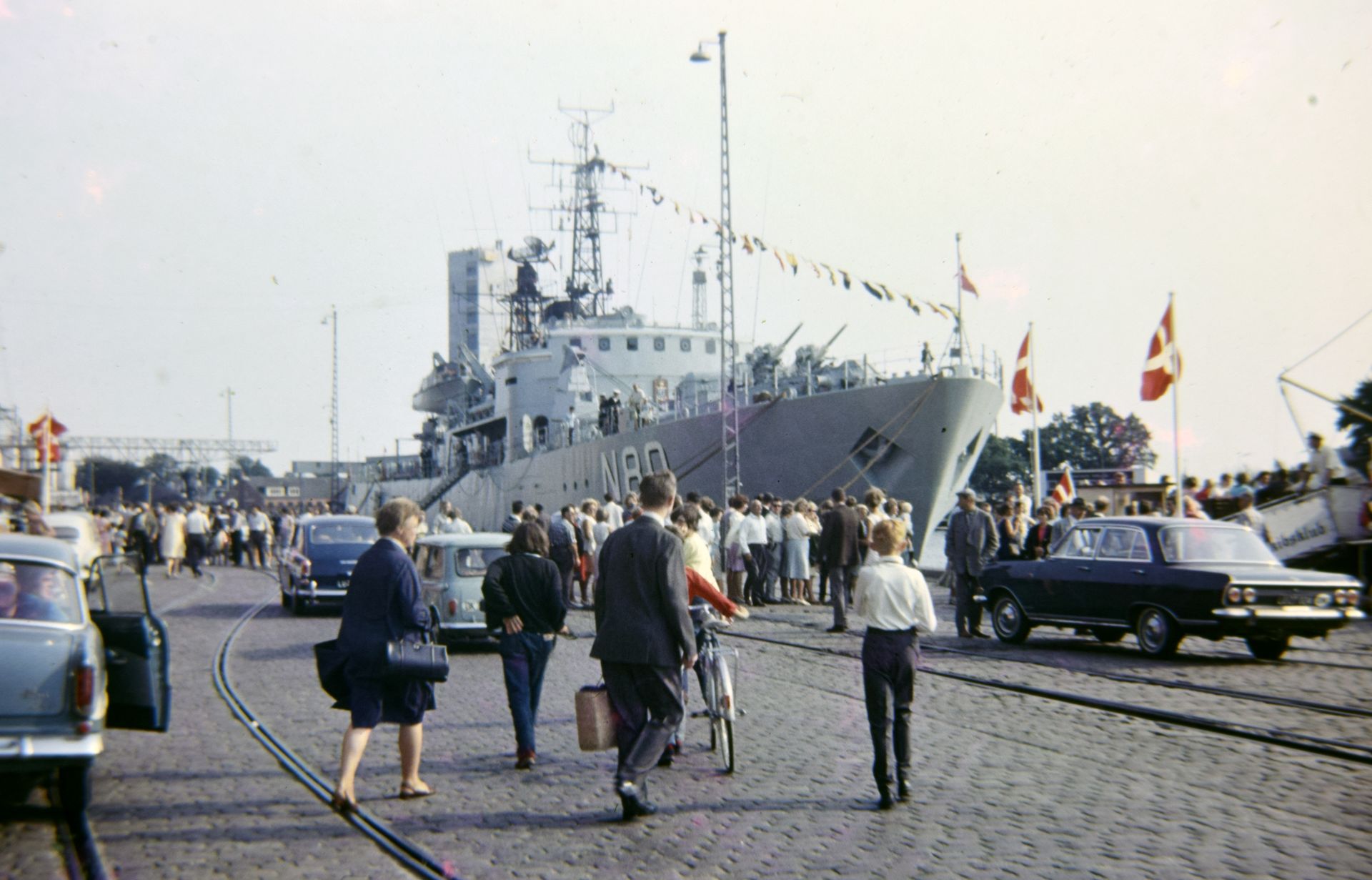
N80 Falster visiting for Nakskov’s 700th city anniversary in 1966
©Historiens Hus Nakskov
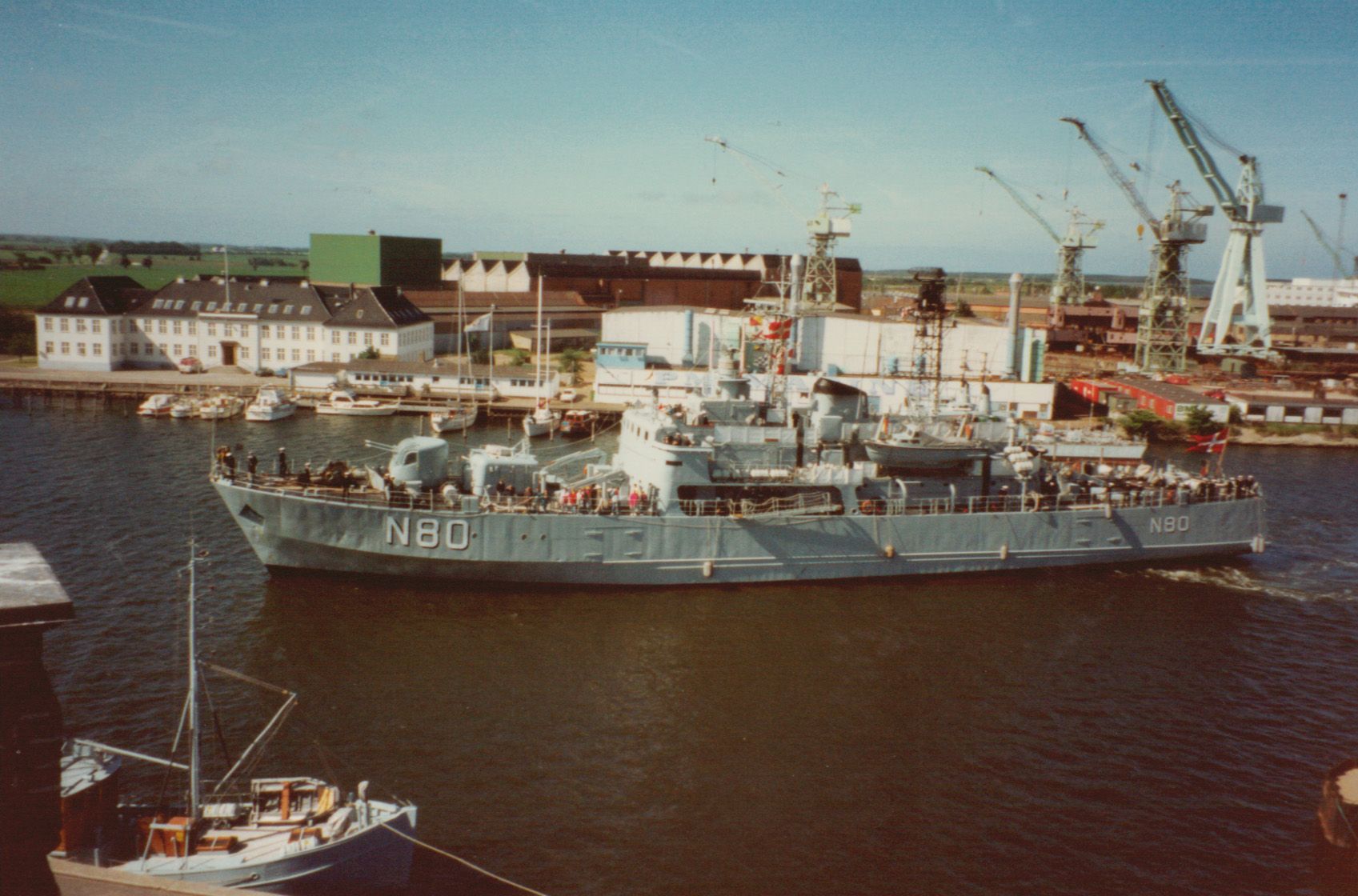
N80 Falster sailing into Nakskov Harbour around 1990-4
©Historiens Hus Nakskov
17.4. P523 Najaden – Lolland municipality’s adoption ship
Najaden is the fourth of six patrol vessels in the Diana class, built to patrol Danish territorial waters. The ship was built in 2008 at Faaborg Shipyard, like all its sister ships.
- Length: 43 m
- Width: 8.2 m
- Draught: 2 m
- Crew: 12 men
- Top speed: 25 knots
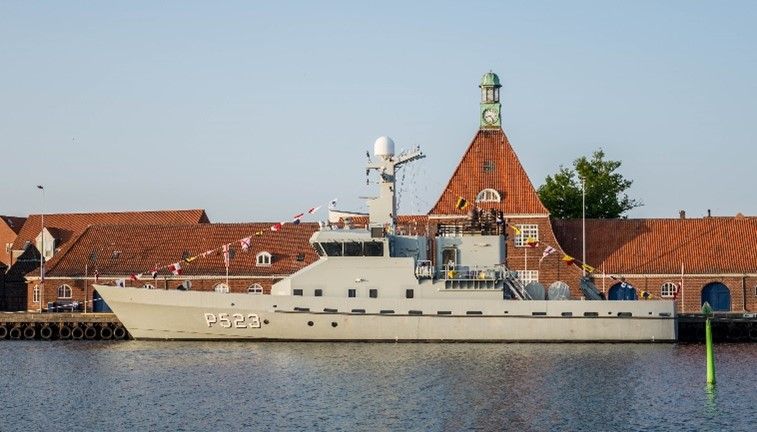
P523 Najaden, lying in front of the Harbour Building in Nakskov
©Brian Thompsen
The ship is named after the nymph Najaden. It is the seventh ship to bear the name Najaden in Danish service. Previous ships were: Najaden (frigate, 1796-1807), Najaden (frigate, 1812-1812), Najaden (corvette, 1820-1852), Najaden (corvette, 1854-1864), Najaden (submarine, 1913-1931), P534 Najaden (patrol vessel, 1963-1991).
There is a tradition for coastal towns to adopt Navy ships. Lolland Municipality adopted Najaden for Nakskov town on 17 November 2012 in a ceremony in Nakskov. This marked the beginning of a mutually beneficial cooperation between the municipality and the Navy. As an adoption ship, Najaden visits Lolland Municipality every other year to give citizens an insight into the Naval life and work conditions, while Najaden’s crew gets to know Nakskov town, Lolland Municipality, and its ports.
18. Cargo ships
18.1
At Nakskov Shipyard, 148 ordinary cargo ships were built during the yard’s lifetime. In addition, 35 tankers were built. In 1933, the first refrigerated ship, Laura, was built for J. Lauritzen Shipping Company. A total of 17 refrigerated ships were built, the last in 1971, after which the refrigerated container took over the market.
The first container ships from Nakskov Shipyard were Falstria from 1971 and Meonia from 1972, both built for ØK. In total, 14 container ships were built at the yard.
Five of these containerships were the so-called “Liner Replacement” ships, which were build in 1978-79. The were also called the “S-ships”: M/S Samoa, M/S Sargodha, M/S Sinaloa, M/S Simba, and M/S Siena. The ships were supposed to be versatile and able to carry various types of cargo. Unfortunately, they lacked the necessary capacity and engine power, they sailed too slowly and were therefore not competitive. ØK chose to have the ships built at the ØK-owned Nakskov Shipyard, which was lacking orders, to help the yard – but the misjudgment regarding these ships contributed to ØK’s financial decline.
ØK was financially strained, and in 1993 chose to sell the company’s container ships to Maersk. Maersk then became the only Danish shipping company with container ships, and the rest is history! Maersk came to dominate the world’s oceans.
18.2.
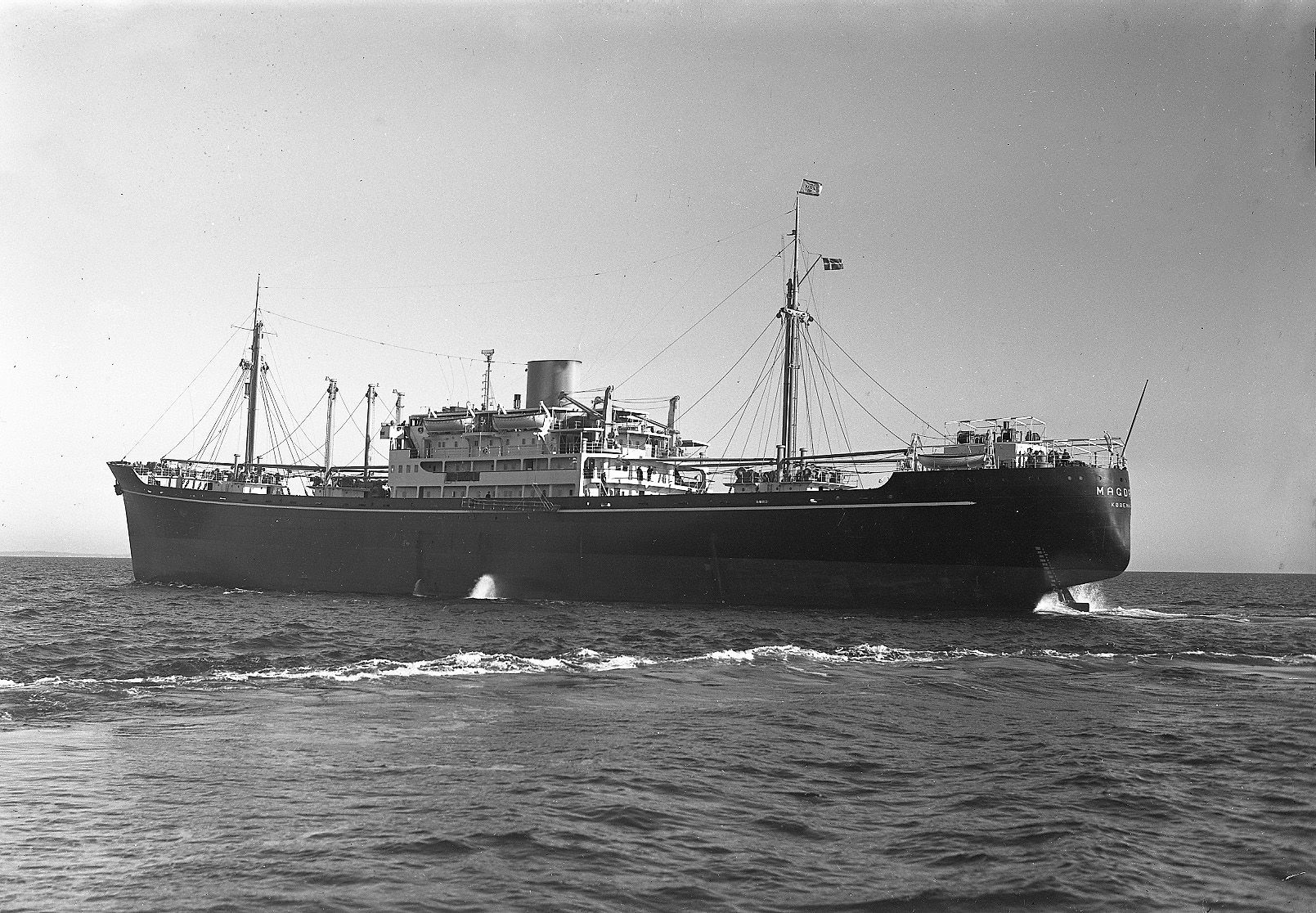
©Historiens Hus Nakskov
M/S Magdala fra 1951 og søsterskibet M/S Mombasa fra 1950 var de to første skibe bygget på værftet, der havde egne kraner. De havde hver to 3 tons kraner. Det var mere effektivt at bruge skibets egne kraner end at skulle bruge de kraner, der var i havnene.
©Brian Thompsen
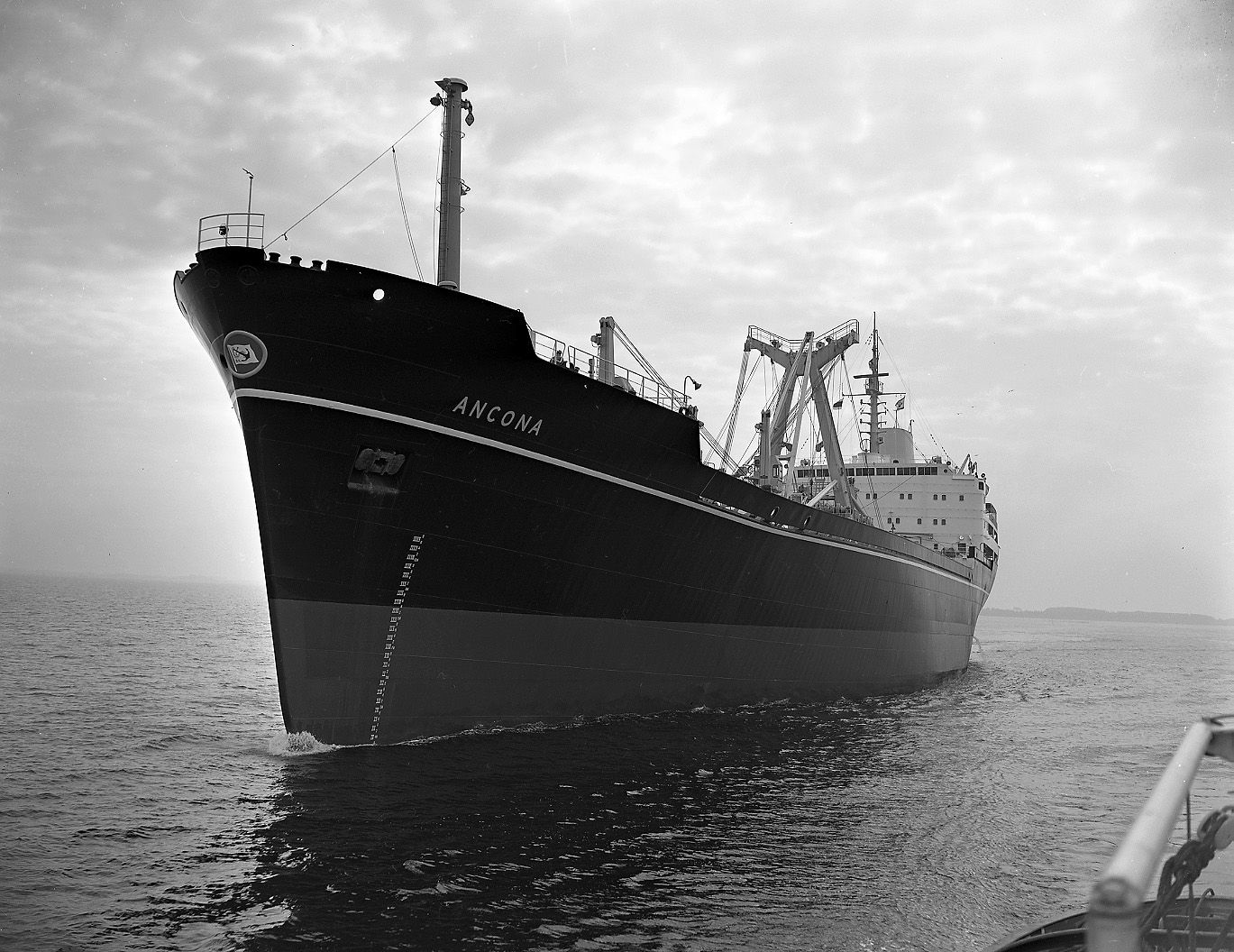
M/S Ancona was built in 1965 at Nakskov Shipyard. It was a cargo ship built for ØK. The ship had 6 cargo holds, of which one was refrigerated, with 10 separate sections, which could be kept at -25 degrees C. The ship could also transport liquids, such as vegetable oils and latex.
©Brian Thompsen
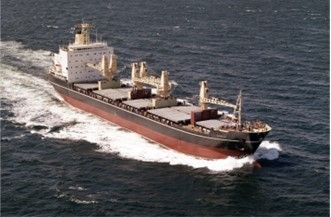
M/S Samoa was the first of the Liner Replacement ships built at Nakskov Shipyard in 1978 for ØK and was a cargo and container ship. The ship’s cranes and holds were designed to carry various types of cargo, such as general cargo, steel products, timber, iron ore, and agricultural products, and grain. It could also carry containers and have a deck load of, for example, timber.
18.3. Cargo ships
The majority of the world’s ships are cargo ships. The transport of goods and materials has always been a central purpose of ships. Have you drunk coffee or cola today, eaten a banana, used your computer or phone – these things came to you on a ship from the other side of the world. Today, 90% of all freight in the world is transported by ship. 60% of the freight is carried in containers.
Since ancient times, things have been packed in boxes for transport. During the Korean War, the Americans transported equipment and supplies in shipping containers. But it wasn’t until 1956 that American Malcolm McLean realised that if a standard container was developed and used by everyone, it would make loading and unloading ships much easier. The container had to be transportable by truck or train. This way, goods could be packed in the container at the manufacturer and arrive in the container at the recipient without being repacked along the way. The container protects the goods, and a locked container makes it harder to steal the contents.
The development of the container led to the construction of huge container terminals in ports and ships that can carry up to 24,000 containers. This streamlining has resulted in shipping today costing only a few percent of what it did in 1956. It has given us the global world. Most of the world’s freight goes between Asia and Europe.
The rest of the freight mainly consists of bulk. Bulk goods are transported unpacked, in loose form, and are loaded on board with pipes, chutes, or cranes with grabs. Bulk goods can be oil products, agricultural products, and construction materials. At the port in Nakskov, you can see ships unloading stones and gravel or sugar beets, and others loading grain.
18.4. Palle Arildsen– Chief Engineer on long Voyages
©Anna Arnecke
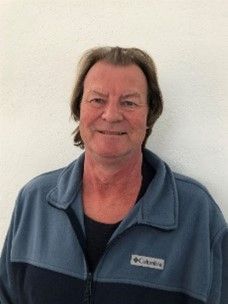
As a young man, I wanted to be a Marine Engineer – on land. I became an Engineer Apprentice at ØK and attended Nakskov Technical School with practical training at Nakskov Shipyard. Later, I studied to become a Marine Engineer in Svendborg. This included being at sea for a year. I also served in the Navy before getting a land job. I then got married and had children, and we wanted to be closer to the grandparents in Lolland. I got a job on the Rødby-Puttgarden ferry, where I sailed for 15 years on the ferries Dronning Margrethe II and Prins Henrik. When Scandlines got new ferries, they needed fewer staff. I then switched to Maersk and started sailing long voyages.
Today, I sail on Nimtofte Mærsk. We sail fixed 5-week routes between Malaysia – Singapore – Vietnam – Hong Kong – China. Nimtofte Mærsk is a feeder container ship. We pick up containers in ports and deliver them to larger ships that are too big to call at the ports. For example, we sail 5 hours up the Mekong River to Ho Chi Minh City.
We sail two trips in a row, so we are away for 10 weeks at a time. Then we have 10 weeks off, of course with full pay. We are always the same Top 4 Team (Captain, Chief Officer, Chief Engineer, and 1st Engineer). In total, there are 23 men/women on board, from Denmark, India, the Philippines, and South Africa.
In the engine room, there are eight of us. We work from 8-17, and the engine room is unmanned at night. There are alarms if something goes wrong. We arrive and depart at all times of the day or night, where I still have to work. The longest we normally spend at sea is 3 days.
I don’t feel lonely when I am on board. I spend a lot of my free time reading. I also watch films. We have good internet on board, so I can read news from Denmark and be on Facebook and make video calls to family and friends. I once teased my wife by turning the lights on and off in our house via the house’s alarm system!
Today, people sit with their screens, so there isn’t quite the same camaraderie as there used to be on board in the old days.
As a sailor, you get to see exotic places. My most exotic experience was on a trip to Brazil a few years ago. We called at Pecém, a port at the end of a 2-kilometre-long pier in the Atlantic Ocean. We were to be there for a day, so we went ashore. It was a cosy little village, cobblestone streets, a square, and a church – but there wasn’t a soul to be seen. We drove further inland. When we returned to the village in the evening, it was filled with people, there was samba with beautiful Brazilian girls dressed in different colours. The loading crane broke down, so we could stay all night!
19. Ferries
19.1. The First two Ferries – Mommark and Møn
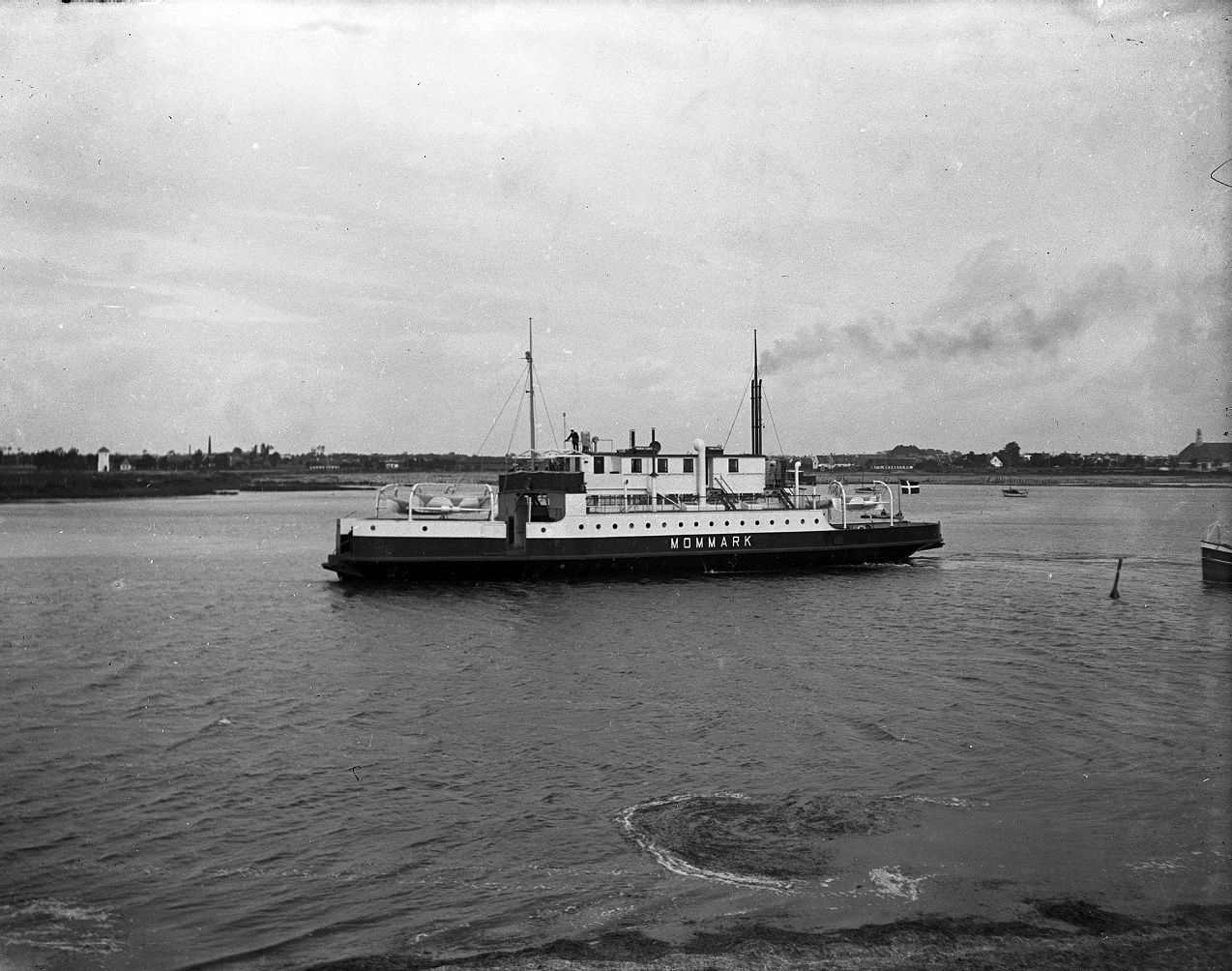
The first two ferries built at Nakskov Shipyard were M/F Mommark in 1922 and M/F Møn in 1923.
©Historiens Hus Nakskov
Mommark was delivered to Mommark Ferry A/S, owned by ØK, and sailed as a railway ferry on the route Mommark – Faaborg. The ferry could carry 300 passengers, 20 cars, and 3-5 railway wagons. It had double railway tracks and could therefore take both narrow and standard gauge railway wagons. The South Funen railways had a gauge of 1435 mm, while the county railways on Als were narrow gauge with a width of 1000 mm. In 1946, it was sold to DSB (Danish State Railways) for a symbolic amount of 1 krone, and DSB took over the operation. The railway operation ceased in 1962, and in 1964, M/F Mommark was scrapped.
M/F Møn was delivered to Præstø County and sailed on the route Kallehave on Zealand to Koster on Møn. The ferry could carry 6 cars. The ferry sailed on this route until 1938, when it became too small. The ferry was bought by the state for 30,000 DKK for use by the Virus Institute on the island of Lindholm, after which the ferry sailed between Kalvehave and Lindholm until 2000, when it was replaced by the ferry Virus. The State Veterinary Institute for Virus Research was closed in 2019. M/F Møn is now a museum ferry and is based in Stege on Møn.
19.2. The last two ferries – Peder Paars and Niels Klim
In 1983, DSB ordered two large car and passenger ferries for the Aarhus-Kalundborg route from Nakskov Shipyard. Peder Paars was delivered in October 1985 and Niels Klim in April 1986. These were the last two ships built at Nakskov Shipyard.
The ferries could carry 330 cars and 2000 passengers.
Peder Paars made its first voyage on 19 November 1985, and Niels Klim on 1 June 1986. In 1990-91, DSB decided there was no need for such large ferries on the route. Both Peder Paars and Niels Klim were taken out of service in May 1991 and replaced by the smaller ferries Ask and Urd. Peder Paars and Niels Klim were sold to Stena Line.
Peder Paars was renamed Stena Invicta the day after the sale and sailed on the English Channel, and in Finland, Sweden, and Ireland. In 2001, the ferry was sold to Color Line and renamed Color Viking, and sailed in Norway. Most recently, in 2023, the ferry was sold to Greek Seajets and is now named Superstar II.
Niels Klim was renamed Stena Nautica but was renamed Isle of Innisfree the following year and sailed between Ireland and England. In 1995, the ferry was renamed Lion King while it sailed on the Grenaa-Halmstad route. In 1996, the ferry was renamed Stena Nautica again and sailed between Morocco and Spain. In 1997, the ferry was chartered by NATO as a transport ship. From 2001, the ferry sailed on the Grenaa-Varberg route. In 2004, the ferry collided in dense fog with the Polish cargo ship Joanna. Everyone on board was rescued onto M/S Stena Germanica, but the ferry’s hull suffered extensive damage. After repairs, the ferry resumed sailing from Grenaa to Varberg. On 8 August 2014, the ferry sailed into the harbour mole in Grenaa and was damaged. It was repaired and continued sailing on the route. Since 2020, it is sailing on the Grenaa-Halmstad route.
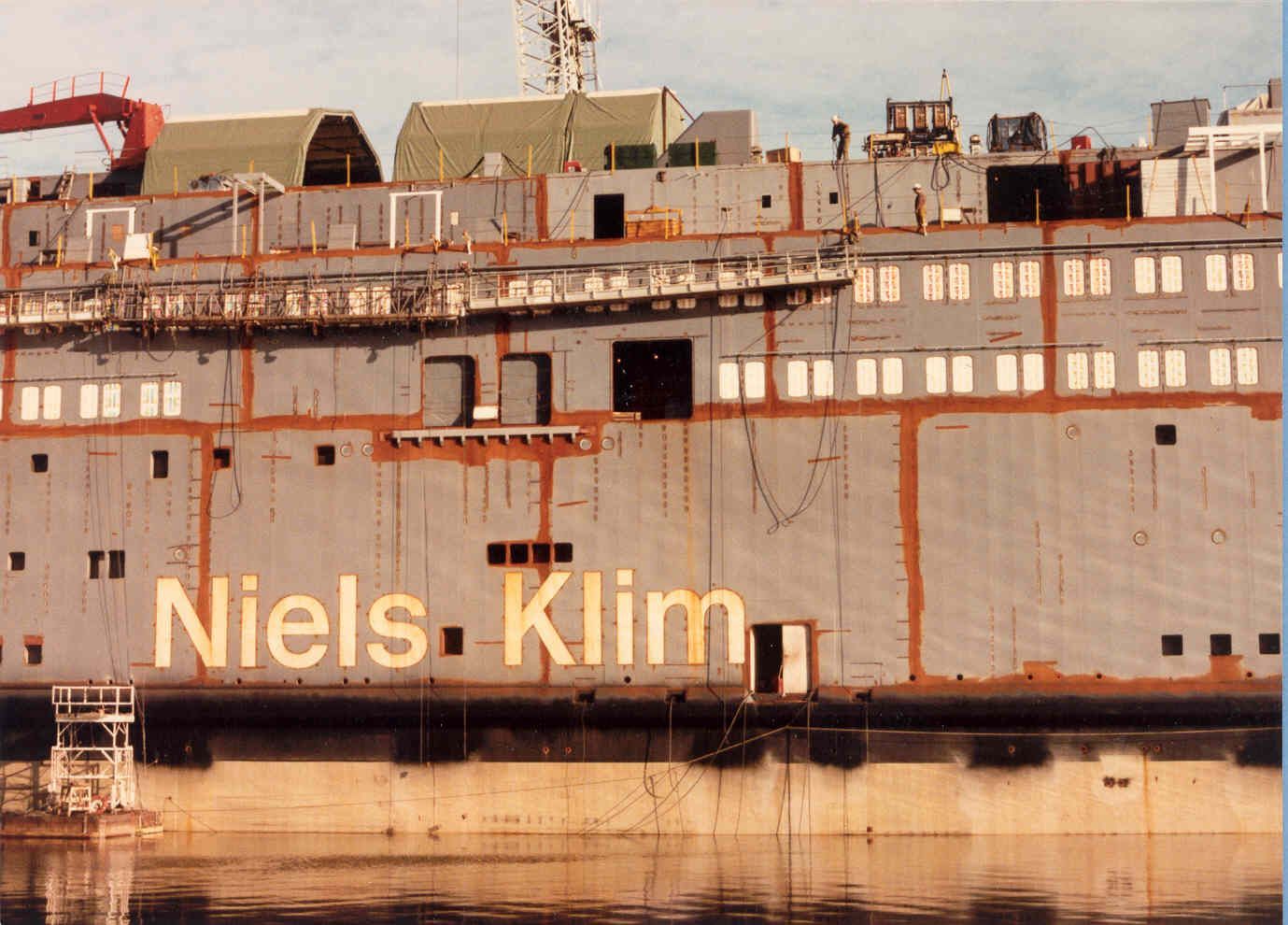
Niels Klim being built at Nakskov Shipyard
©Historiens Hus Nakskov
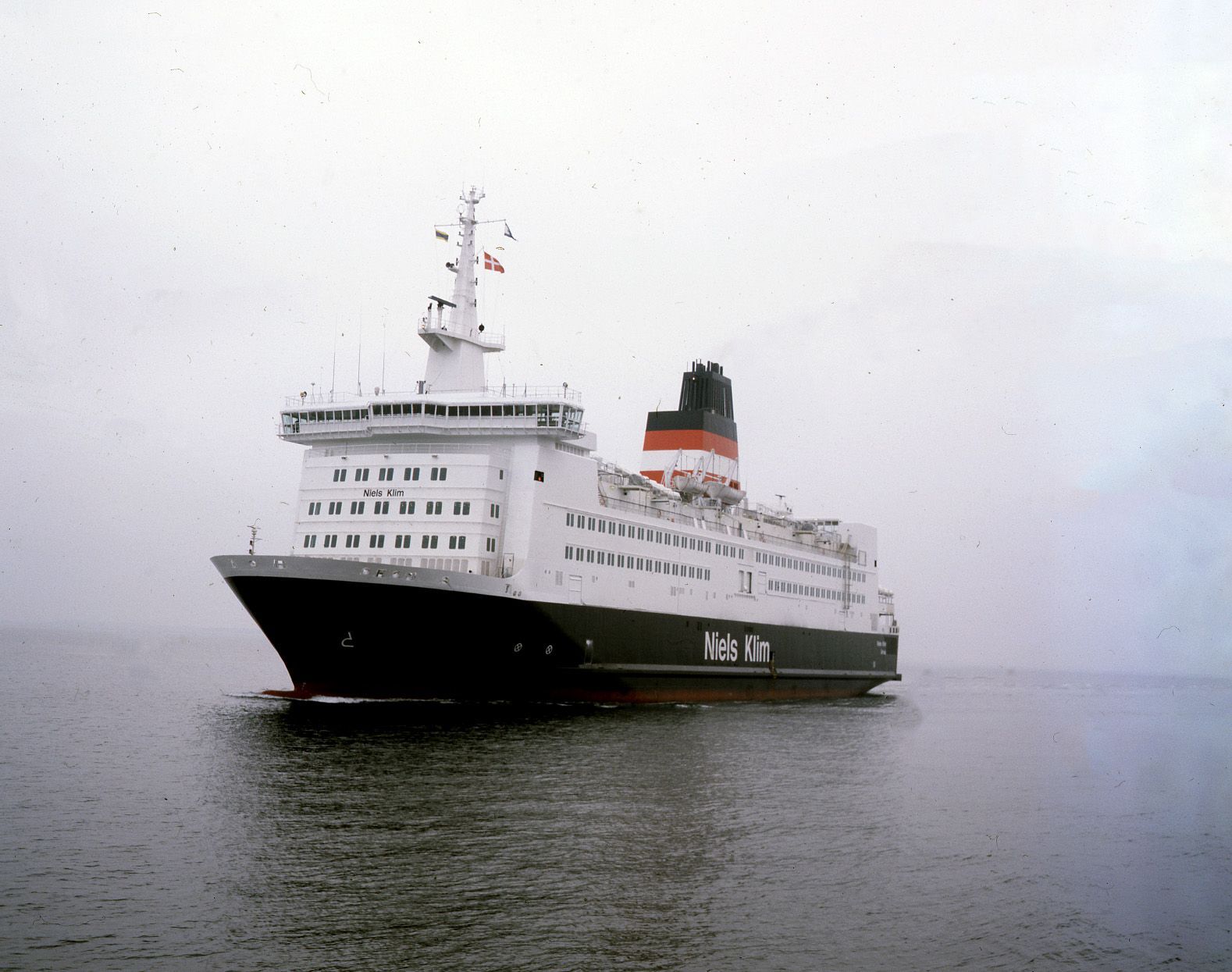
Niels Klim on a trial run in 1985
©Historiens Hus Nakskov
19.3.
I was on one of the first trips from Kalundborg to Aarhus on Peder Paars in 1985; it was a brand new ferry. I walked around the ferry and absorbed all the technical installations, lights, fire alarms, and door closers. It was clear that someone had decided that everything should be done to the highest standard. Midships, there was a small square with a glass office, perhaps DSB ticket sales; the people in there had computers and Dancall mobile phones at each station. Mobile phones were only introduced in 1984, so having them on a ferry was expensive! I was really impressed; I remember the trip to this day – it was something completely different from the Great Belt ferries. – Passenger Steffen A. (22 years old in 1985)
19.4. M/F Dronning Margrethe II and M/F Prins Henrik
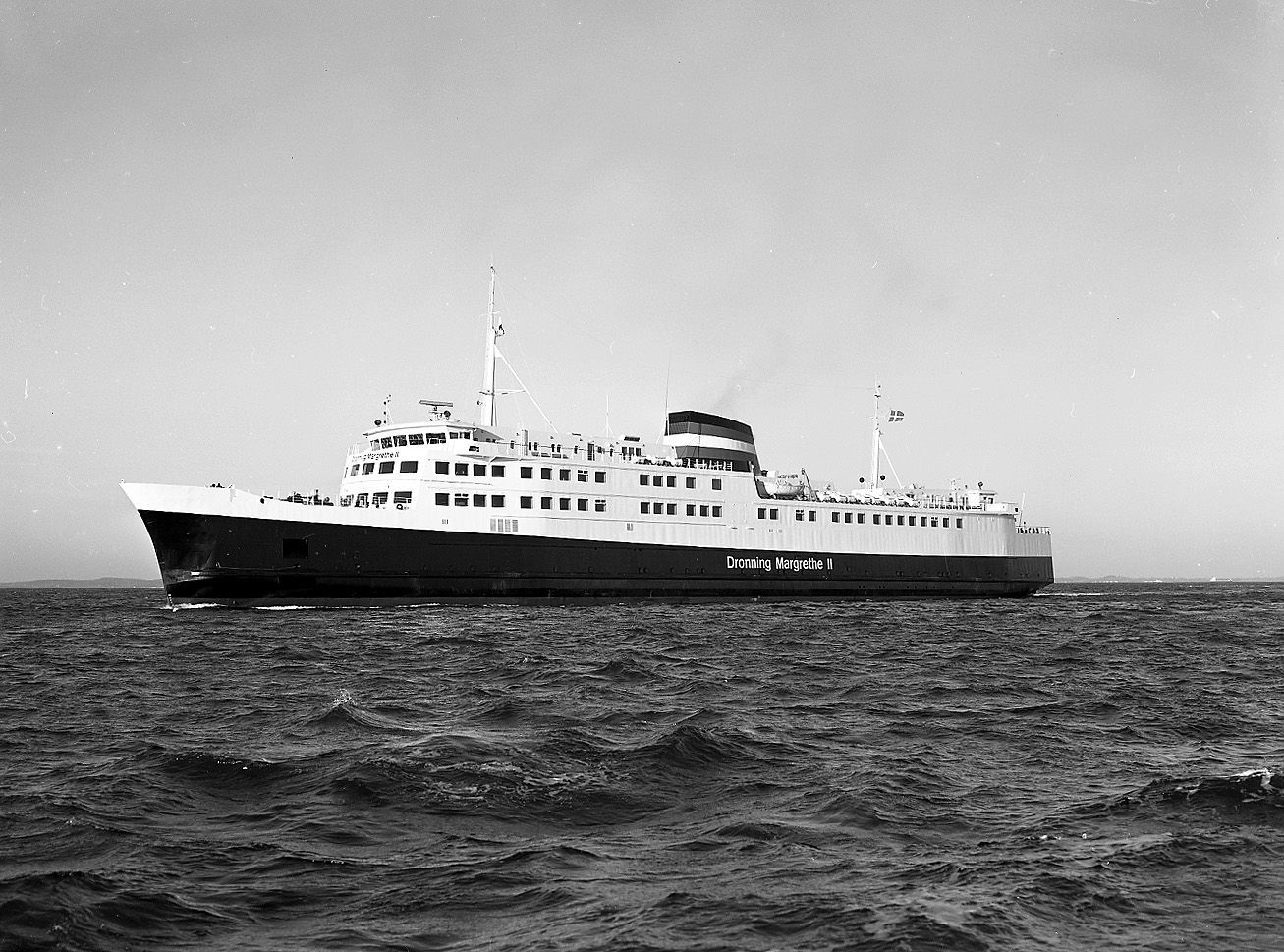
M/F Dronning Margrethe II was built at Nakskov Shipyard in 1972-3. The ferry was launched on 14 March 1973, after Queen Margrethe named it. The ferry was delivered to the Danish State Railways on 6 December 1973.
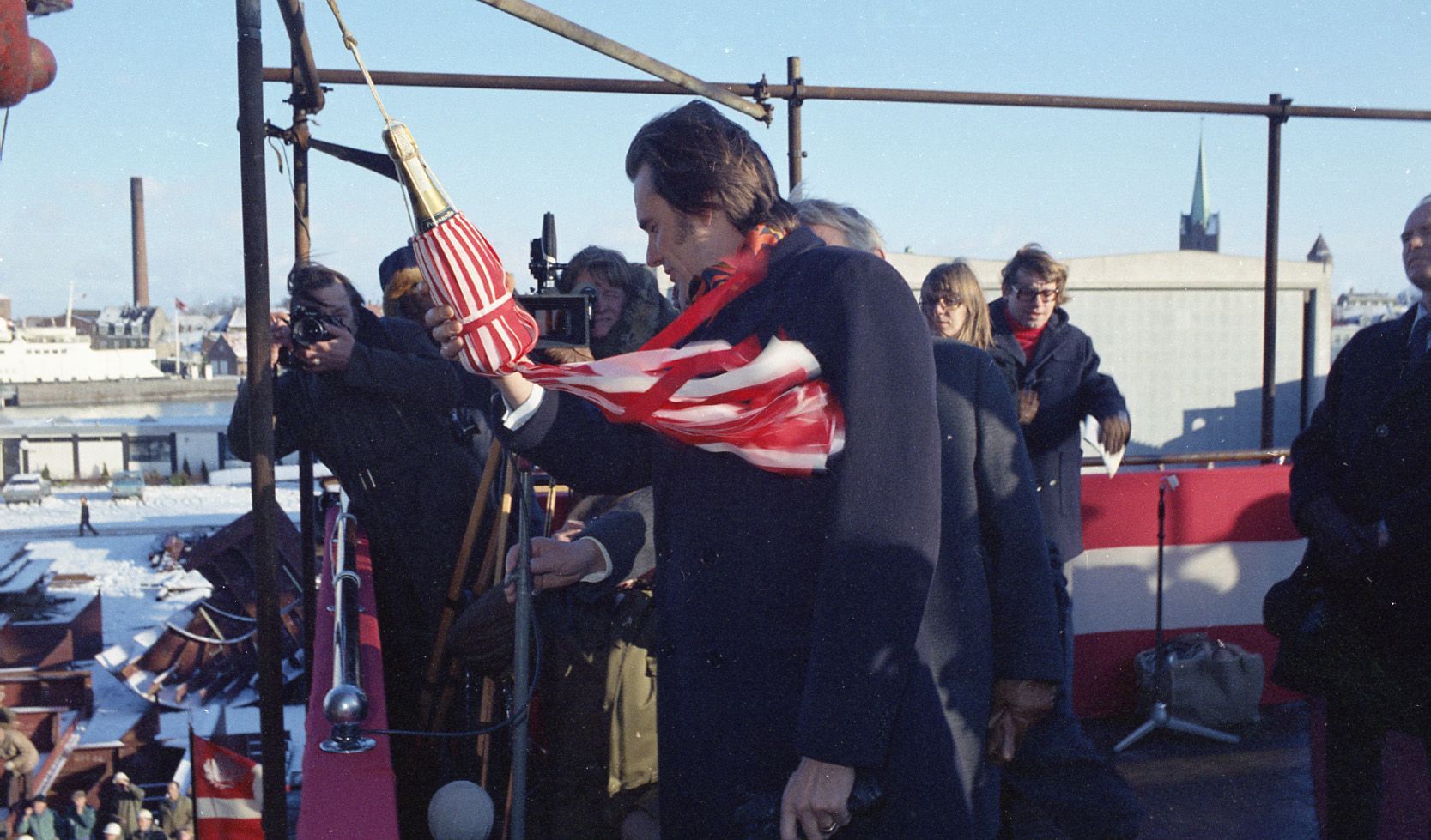
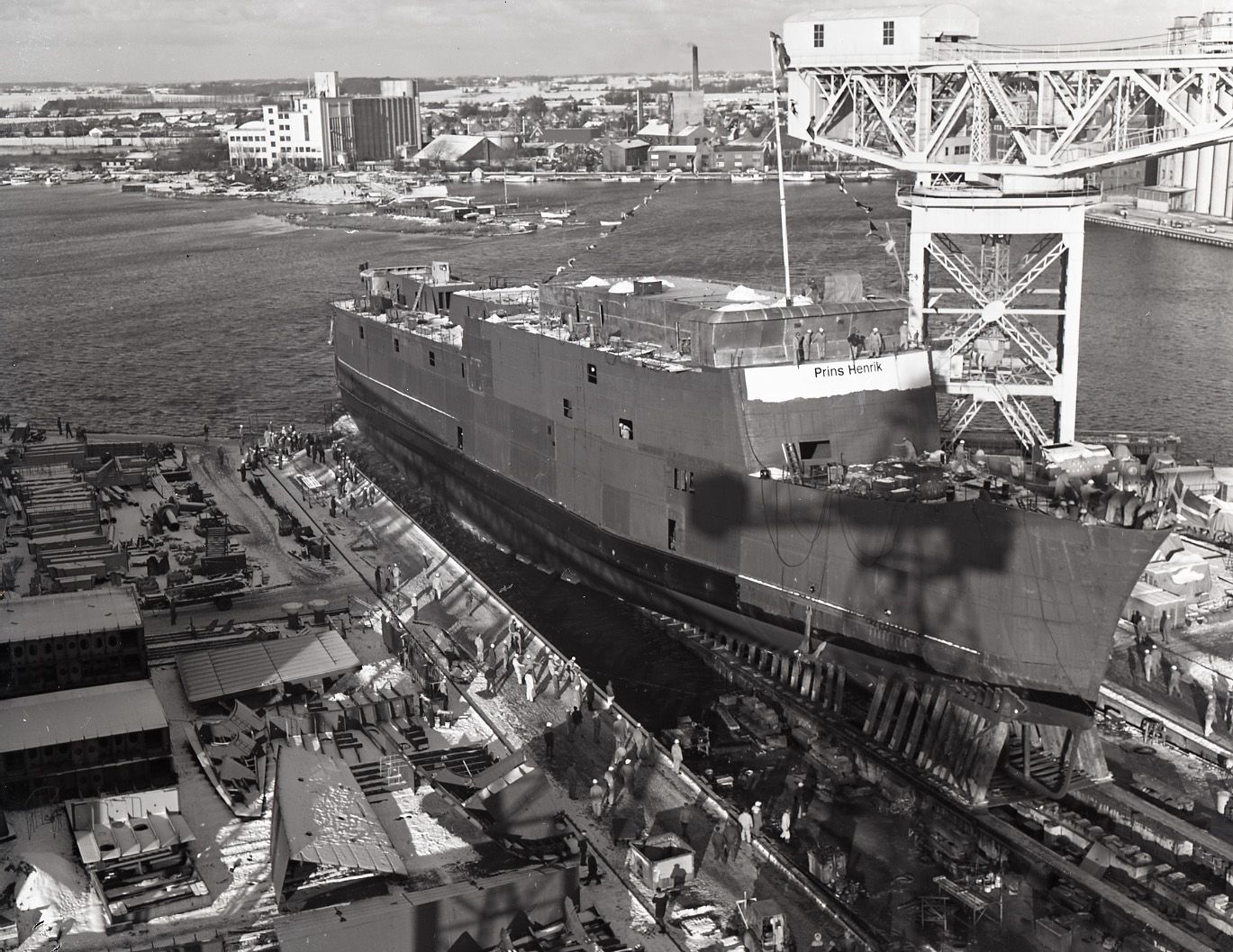
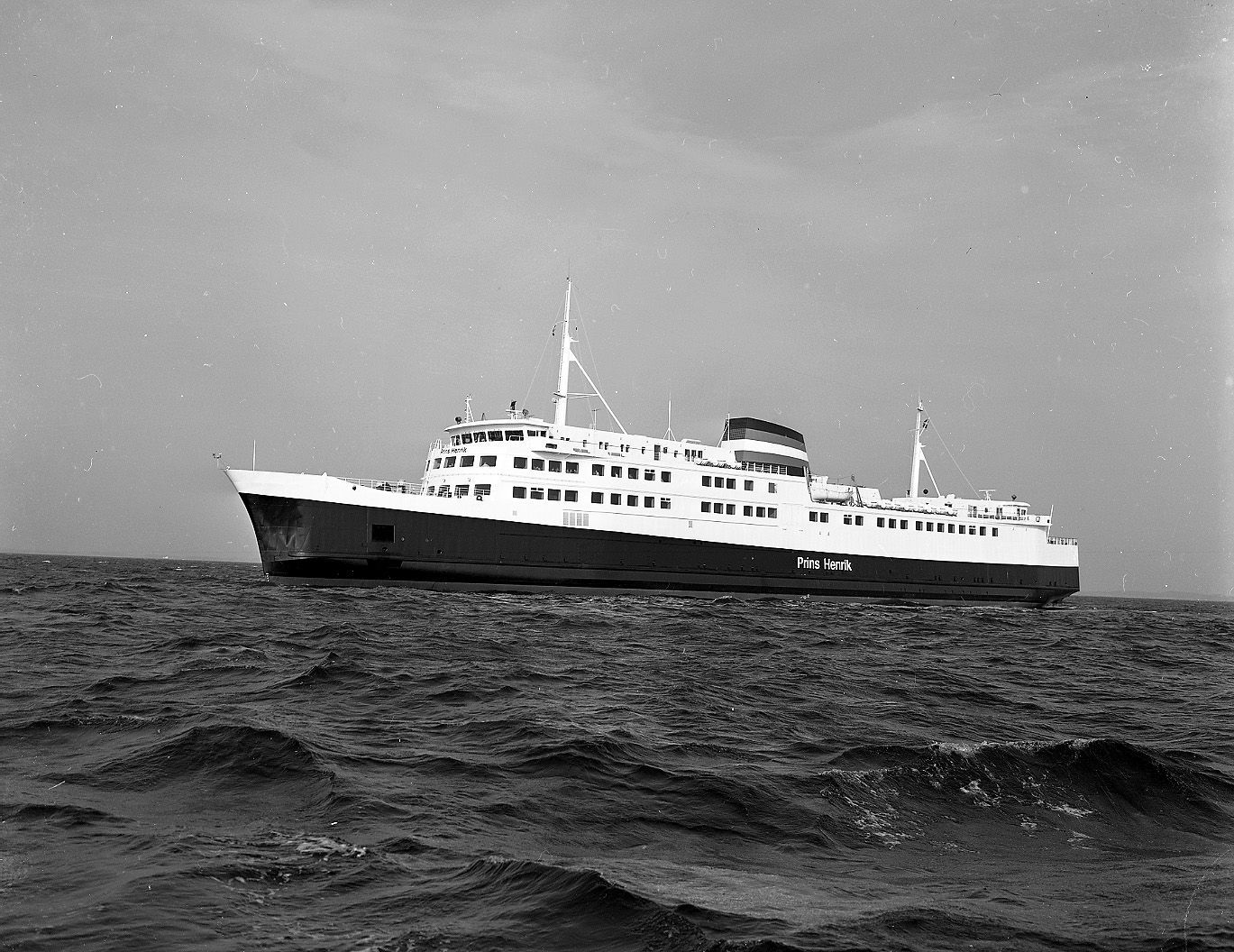
The sister ferry Prins Henrik was built at the yard in 1973-4. Prince Henrik named the ferry on 29 November 1973, after which it was launched. The ferry was handed over to DSB in May 1974.
The ferries were originally built as “Intercity” railway ferries with three railway tracks and space for 210 cars and 1500 passengers. They were to sail on the Great Belt route between Korsør and Nyborg and also sailed on the car ferry routes Halsskov-Knudshoved and Aarhus-Kalundborg.
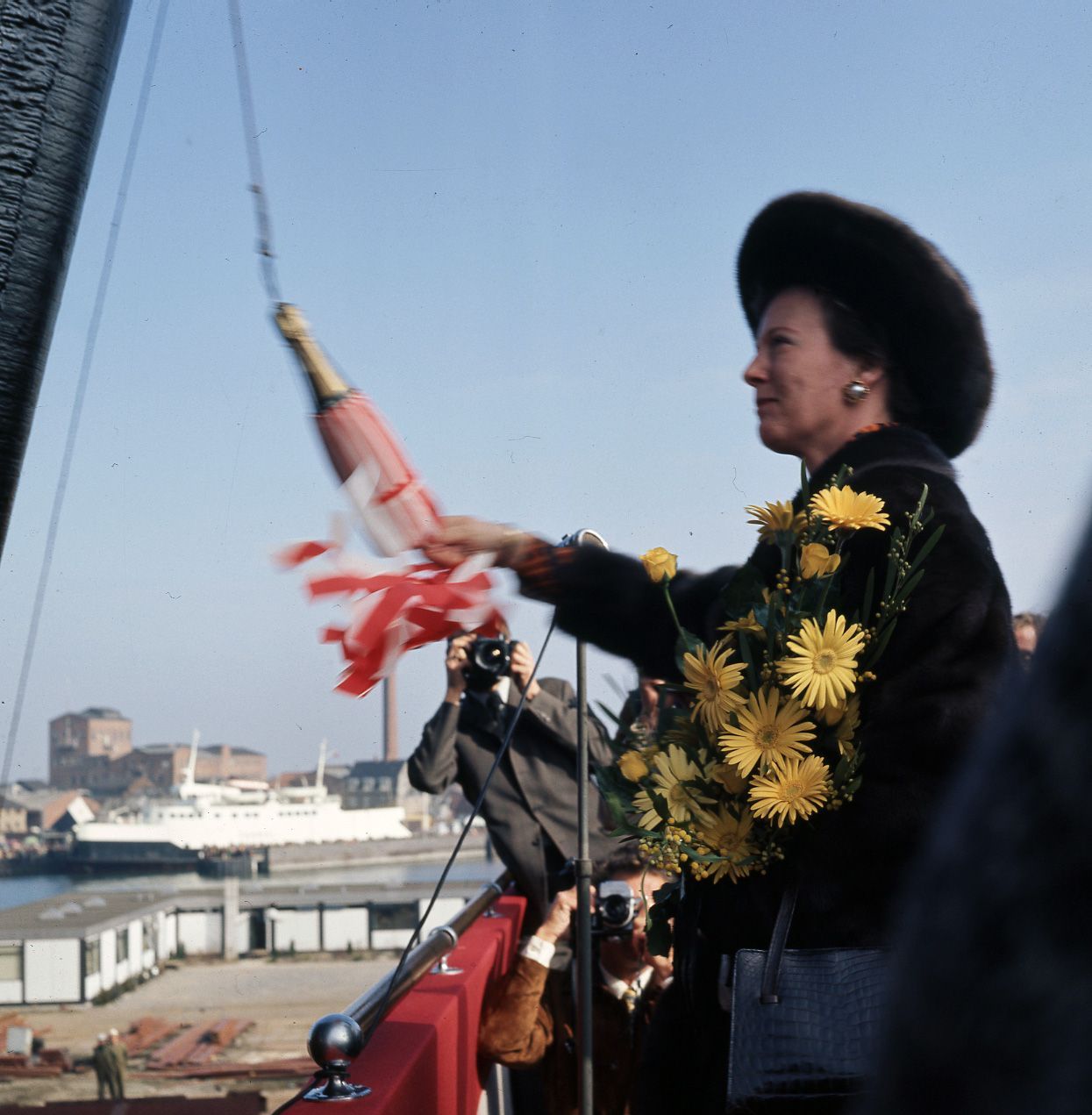
©Historiens Hus Nakskov
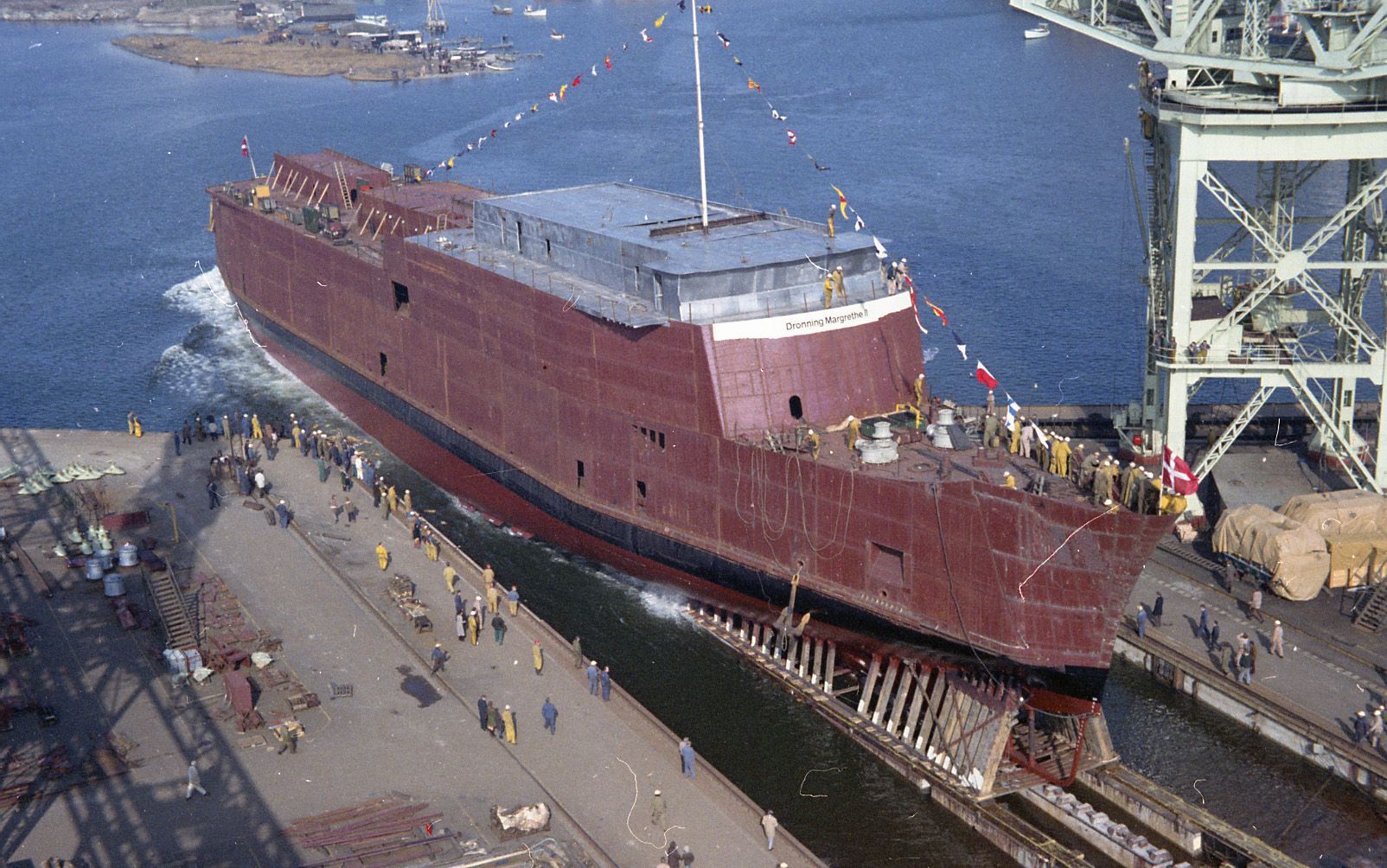
©Historiens Hus Nakskov
©Historiens Hus Nakskov
©Historiens Hus Nakskov
©Historiens Hus Nakskov
©Historiens Hus Nakskov
©Historiens Hus Nakskov
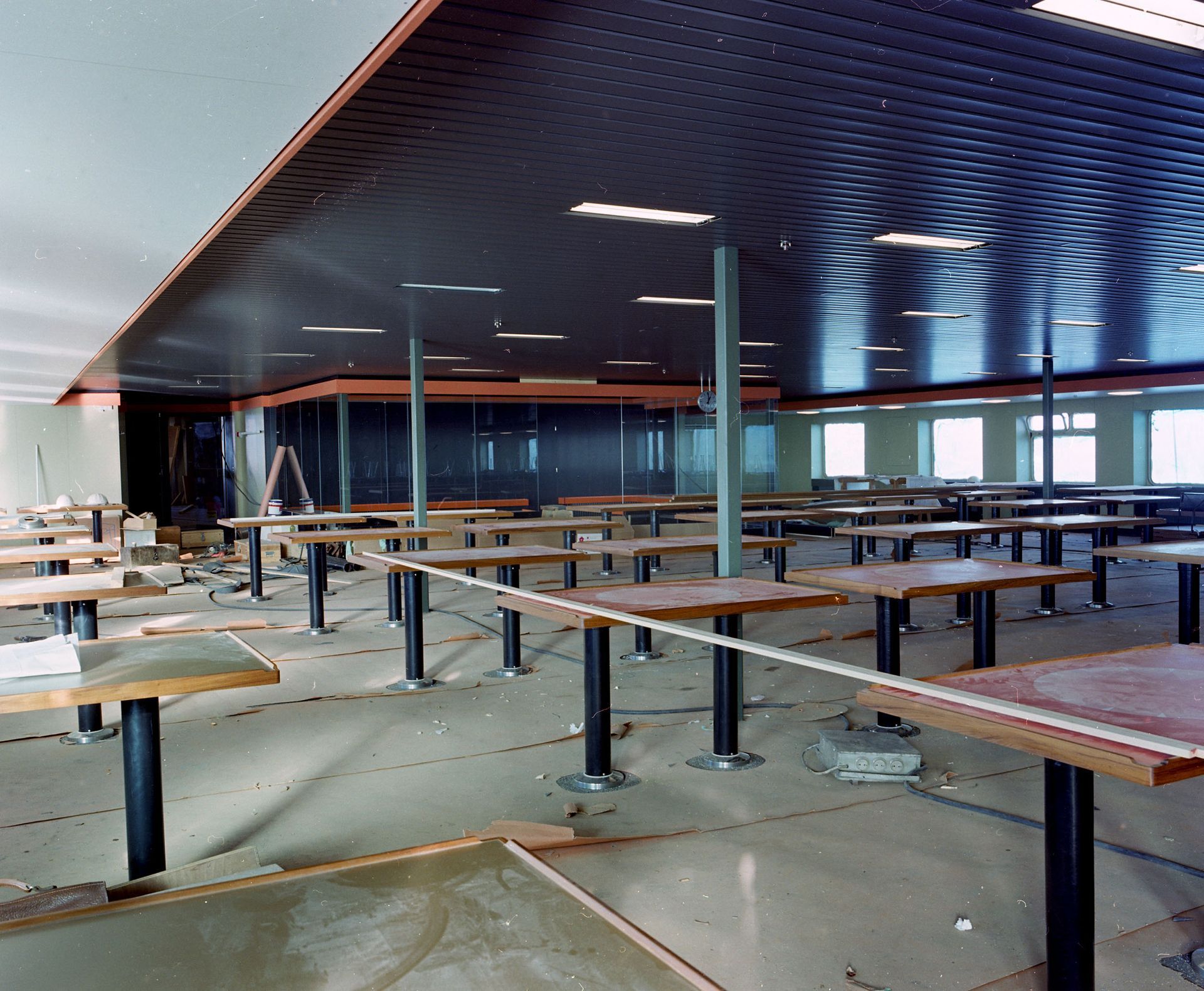
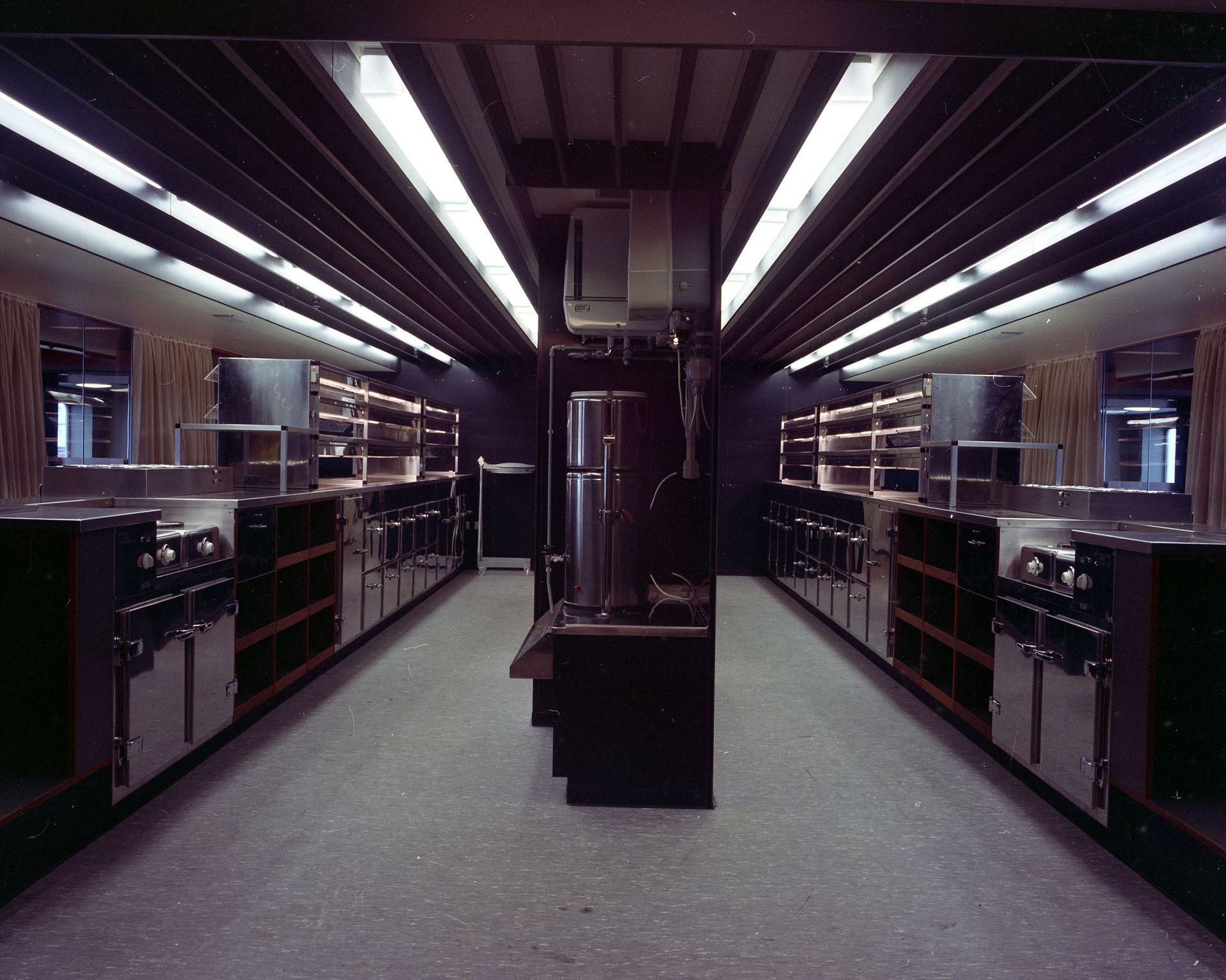
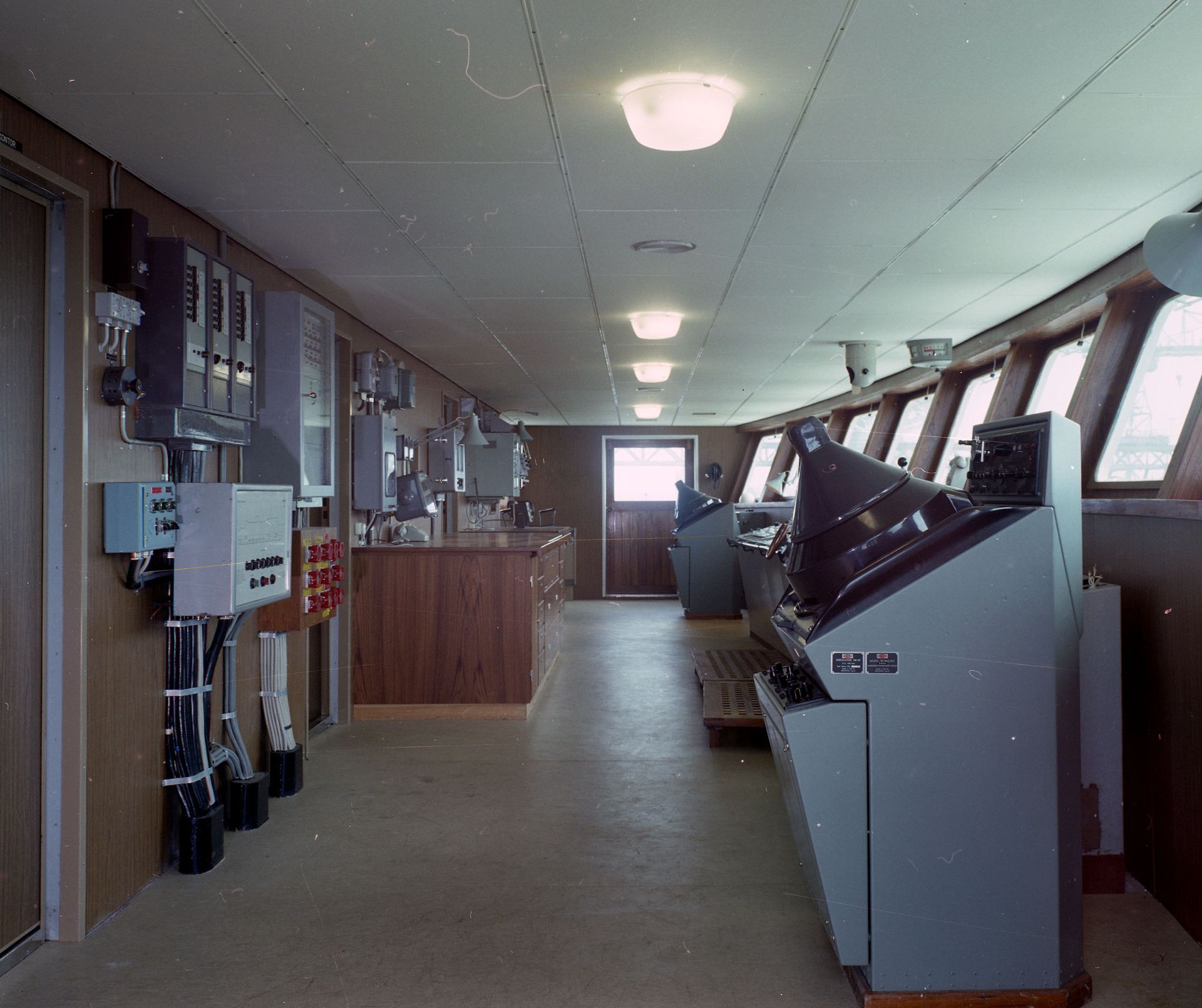
The interior of M/F Dronning Margrethe II, cafeteria, kitchen, and the bridge
©Historiens Hus Nakskov
©Historiens Hus Nakskov
The Ferries were enlarged
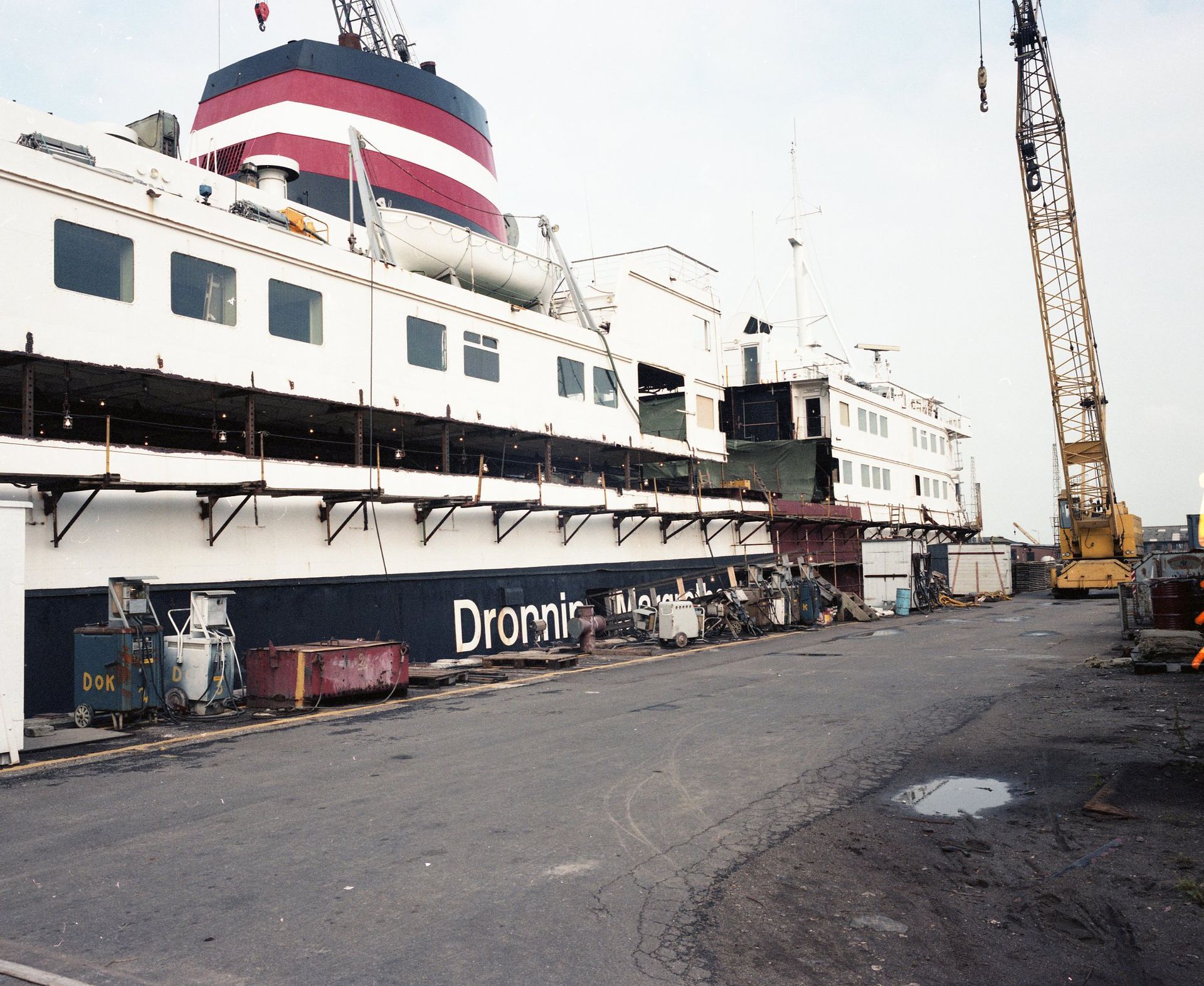
DSB also wanted to use the two ferries on the Rødby-Puttgarden route. They were too small for the capacity needed. Therefore, it was decided to lengthen and heighten them to add an extra car deck. This was done at Nakskov Shipyard, where first Prins Henrik in 1980 and then Dronning Margrethe II in 1982 were enlarged. In a spectacular process, the ferries were cut along and across to lengthen them by 12 meters and heighten them by 2.5 meters to add an extra car deck. After the conversion, there was space for 260 cars and 1800 passengers.
©Historiens Hus Nakskov
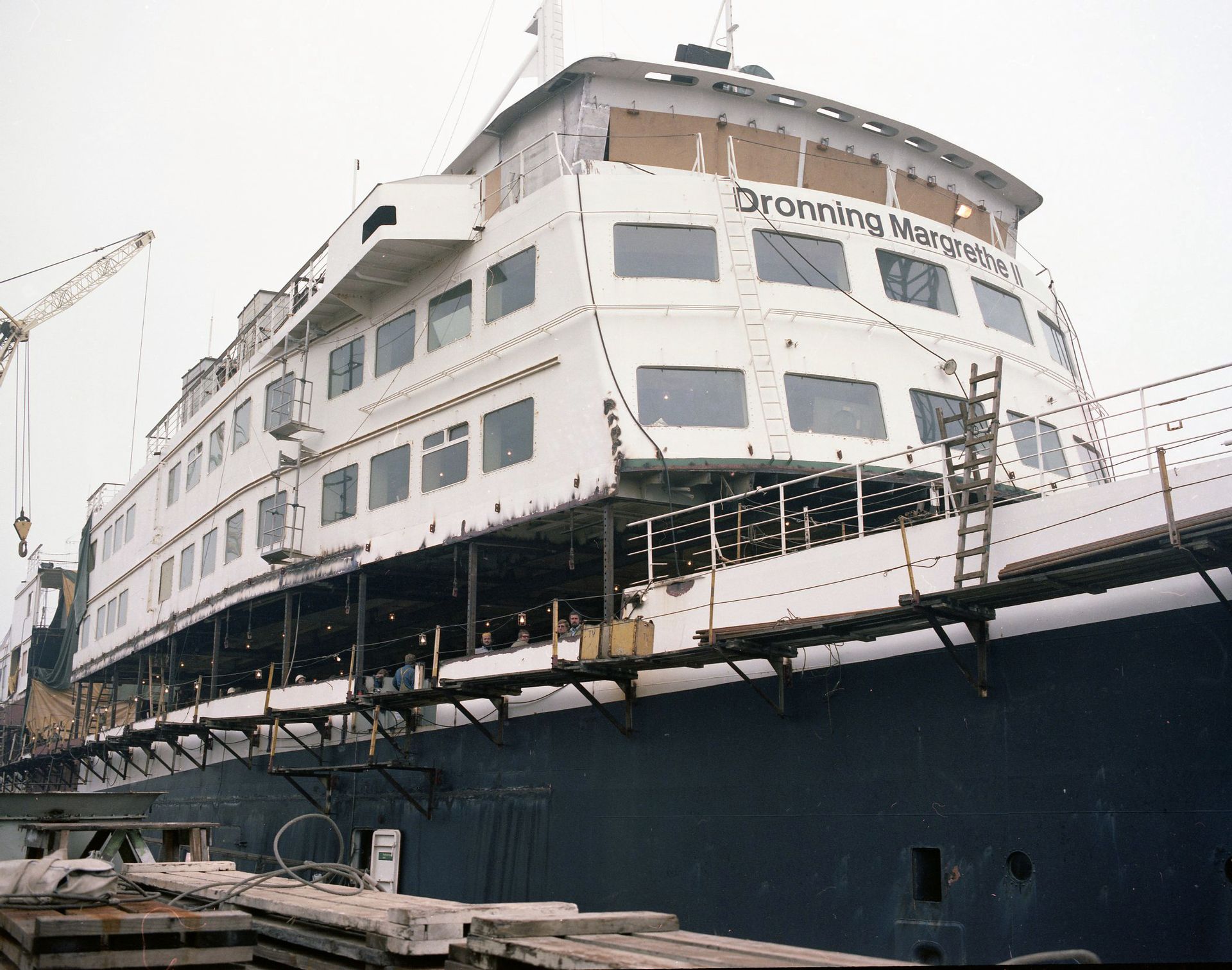
©Historiens Hus Nakskov
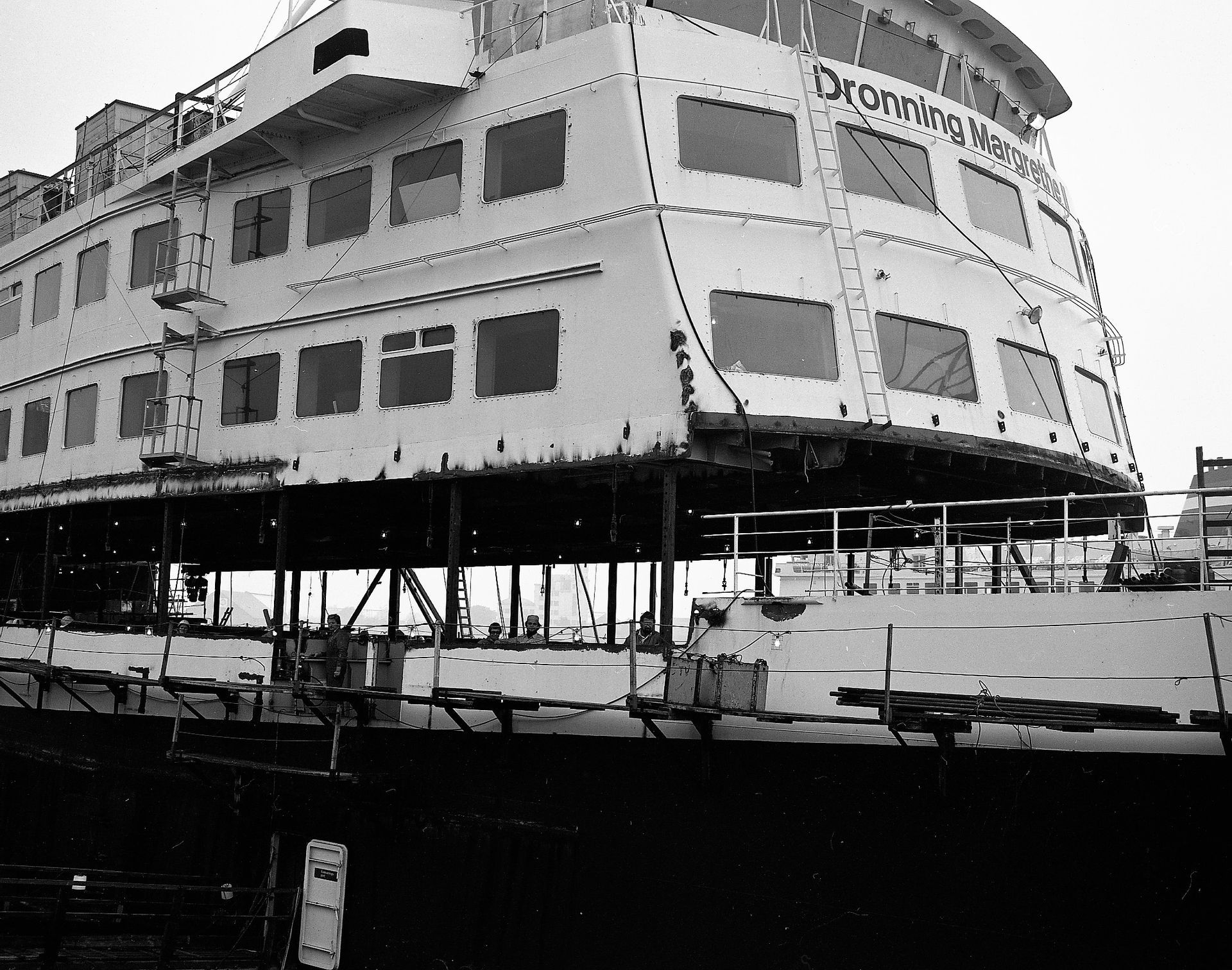
©Historiens Hus Nakskov
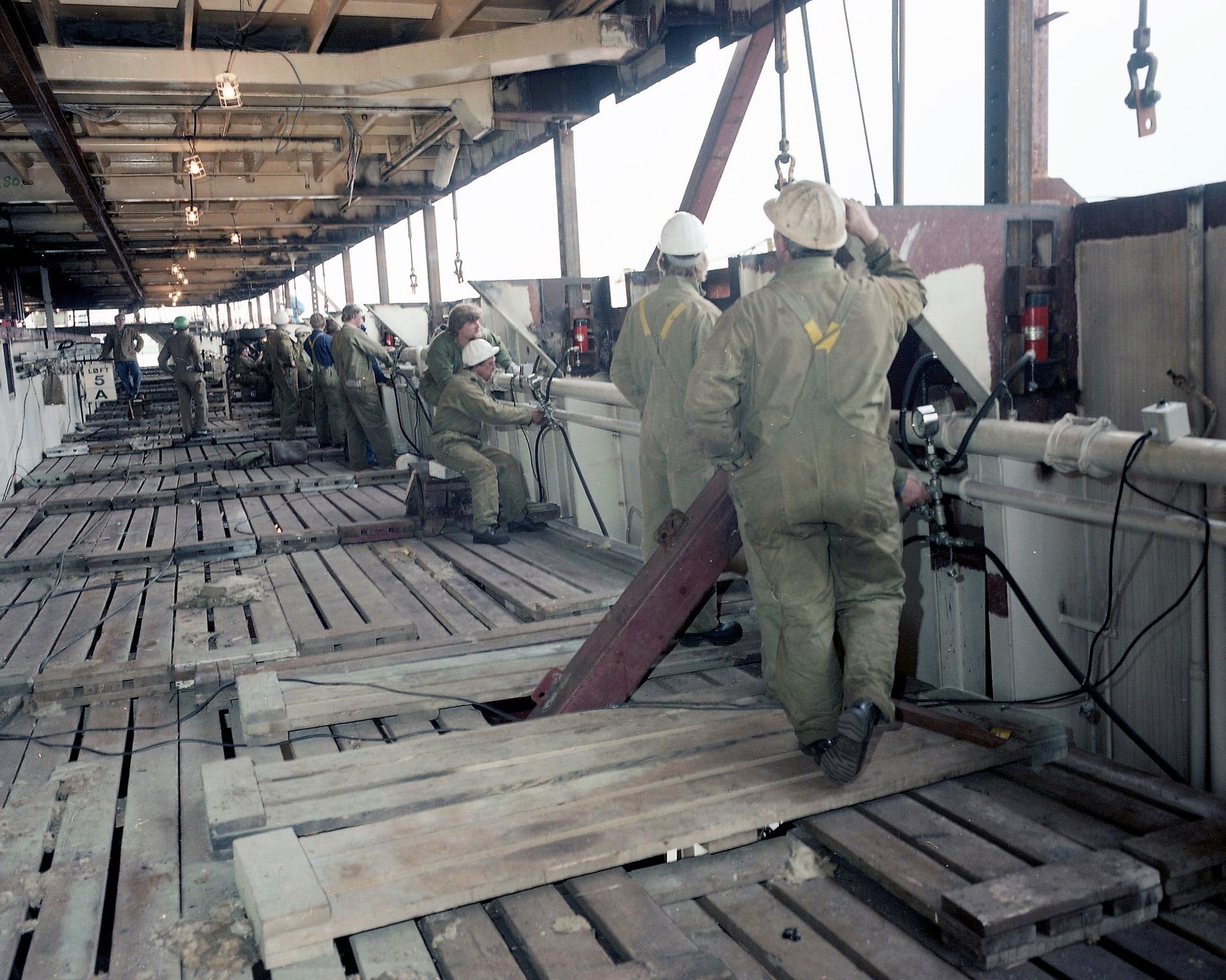
©Historiens Hus Nakskov
After the opening of the Great Belt Bridge, the railway bridge in 1997, and the car bridge in 1998, it was the end for the Great Belt ferries. DSB Shipping was converted into the state-owned Scandlines A/S in 1997.
M/F Dronning Margrethe and M/F Prins Henrik then sailed on the Baltic Sea routes to Germany: Rødby-Puttgarden, Gedser-Warnemünde, and Gedser-Rostock.
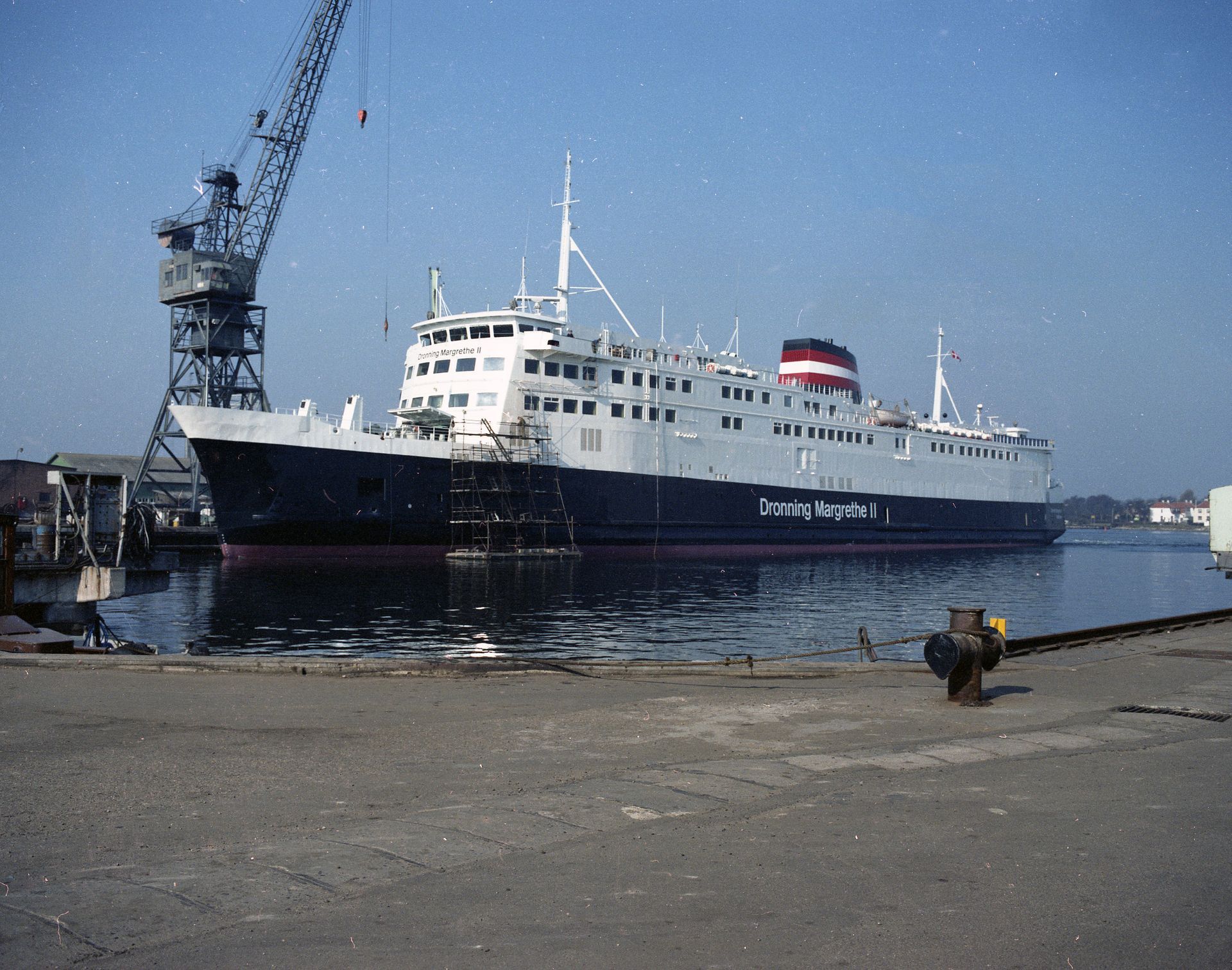
The ferry at dock in Nakskov after the conversion
©Historiens Hus Nakskov
- In 1977, a fire broke out in the engine room on M/F Dronning Margrethe II, and the ferry had to go to the yard in Nakskov.
- Later in 1977, there was a power failure, and M/F Dronning Margrethe II collided with the Koen lightship.
- In 1982, in dense fog, M/F Prins Henrik collided with the ferry berth in Rødby Harbour and damaged the bow port.
- In 1986, there was another power failure on M/F Dronning Margrethe II, and the ferry collided with the eastern pier in Puttgarden.
- In the winter of 1987, M/F Prins Henrik got stuck in the ice off Rødby and had to be rescued.
- The worst accident occurred in 1991, when M/F Dronning Margrethe II collided with the Finnish ship Bore Britannica in dense fog in the Baltic Sea. One crew member was killed. The ferry sustained a large hole in its side, water entered the ferry, and a fire broke out on board. All 14 passengers and some of the crew were rescued onto other ferries. The severely damaged M/F Dronning Margrethe II was towed towards Rødby Harbour and grounded to prevent it from sinking.
- In a January storm in 1993, M/F Dronning Margrethe II collided with the ferry berth in Rødby and was damaged.
M/F Prins Henrik was sold in 1999 and renamed Gioventu, and later in 2004, Espresso Durazzo. The ferry sailed on various routes in Italy.
In 2005, M/F Dronning Margrethe II was sailed to India and scrapped on the beach at Alang. M/F Prins Henrik was scrapped at the same place in 2007.
19.5. M/F Kronprins Frederik and M/F Prins Joachim
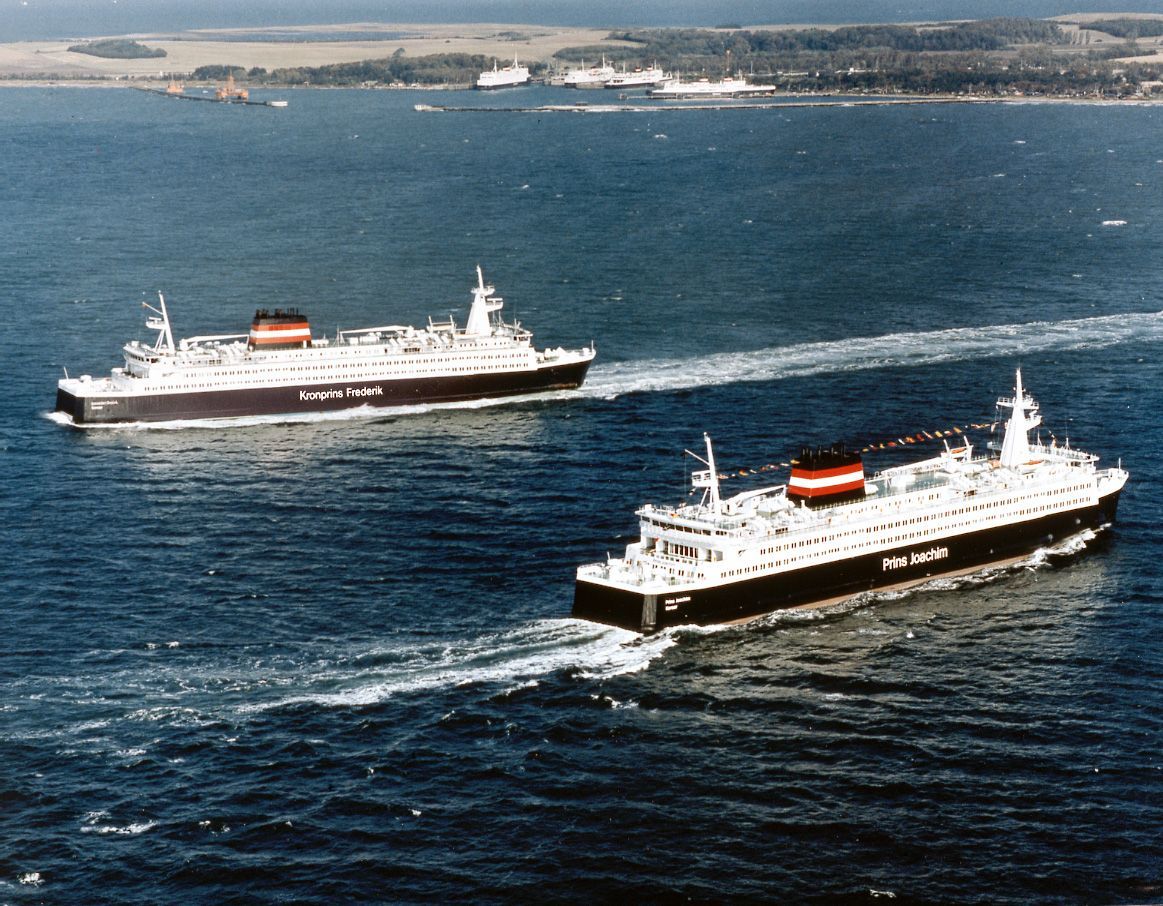
In the late 1970s, DSB ordered three new railway ferries for the Great Belt for the new IC3 trains. The IC3 trains required platforms, which the old ferries did not have. M/F Kronprins Frederik and M/F Prins Joachim were built in 1979-81 at Nakskov Shipyard, and the sister ferry M/F Dronning Ingrid at Helsingør Shipyard. Crown Prince Frederik and Prince Joachim named the ferries on 2 July 1980. First, Prince Joachim named the ferry with his name at 11:00, and at 11:30, it was the Crown Prince’s turn.
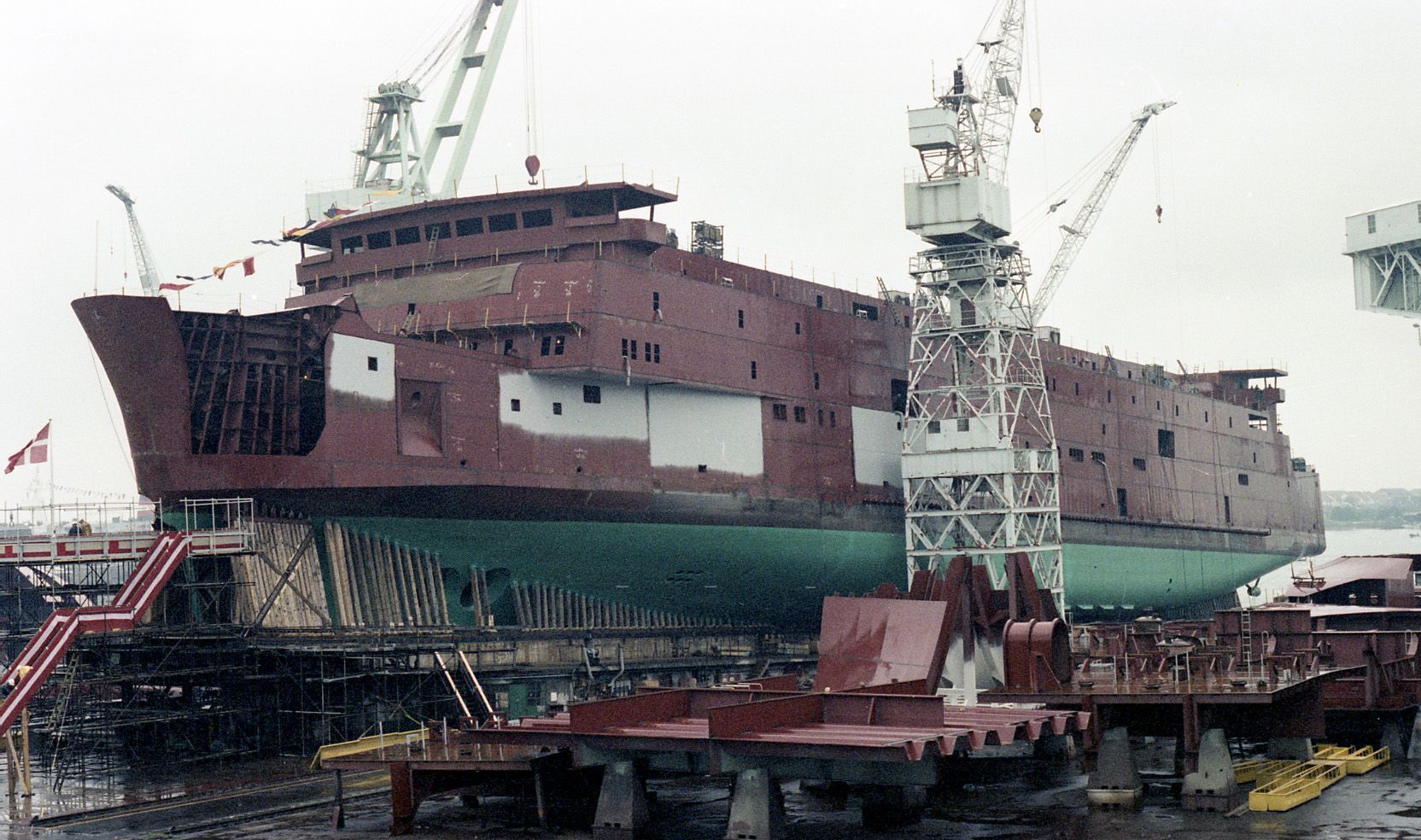
©Historiens Hus Nakskov
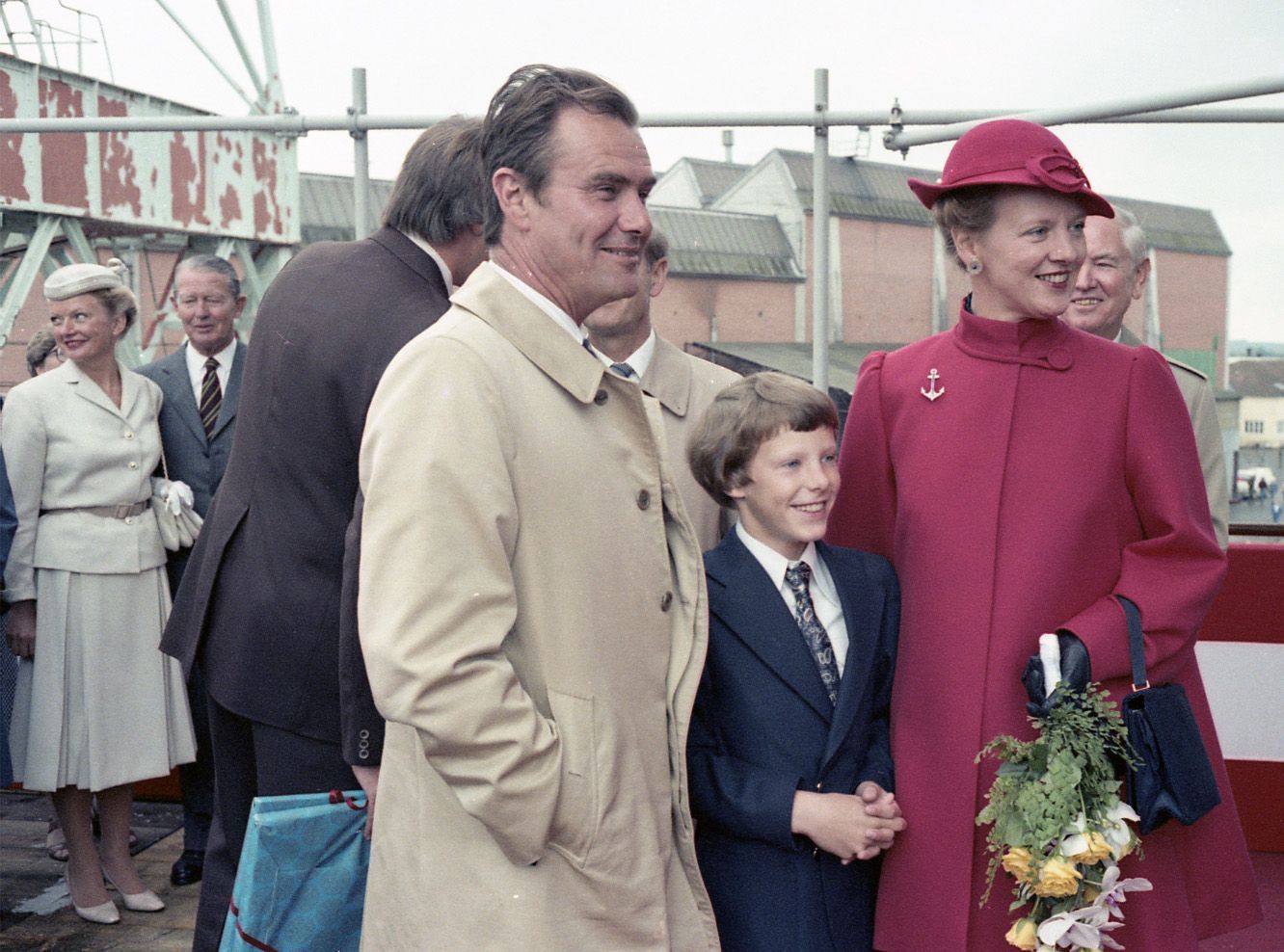
©Historiens Hus Nakskov
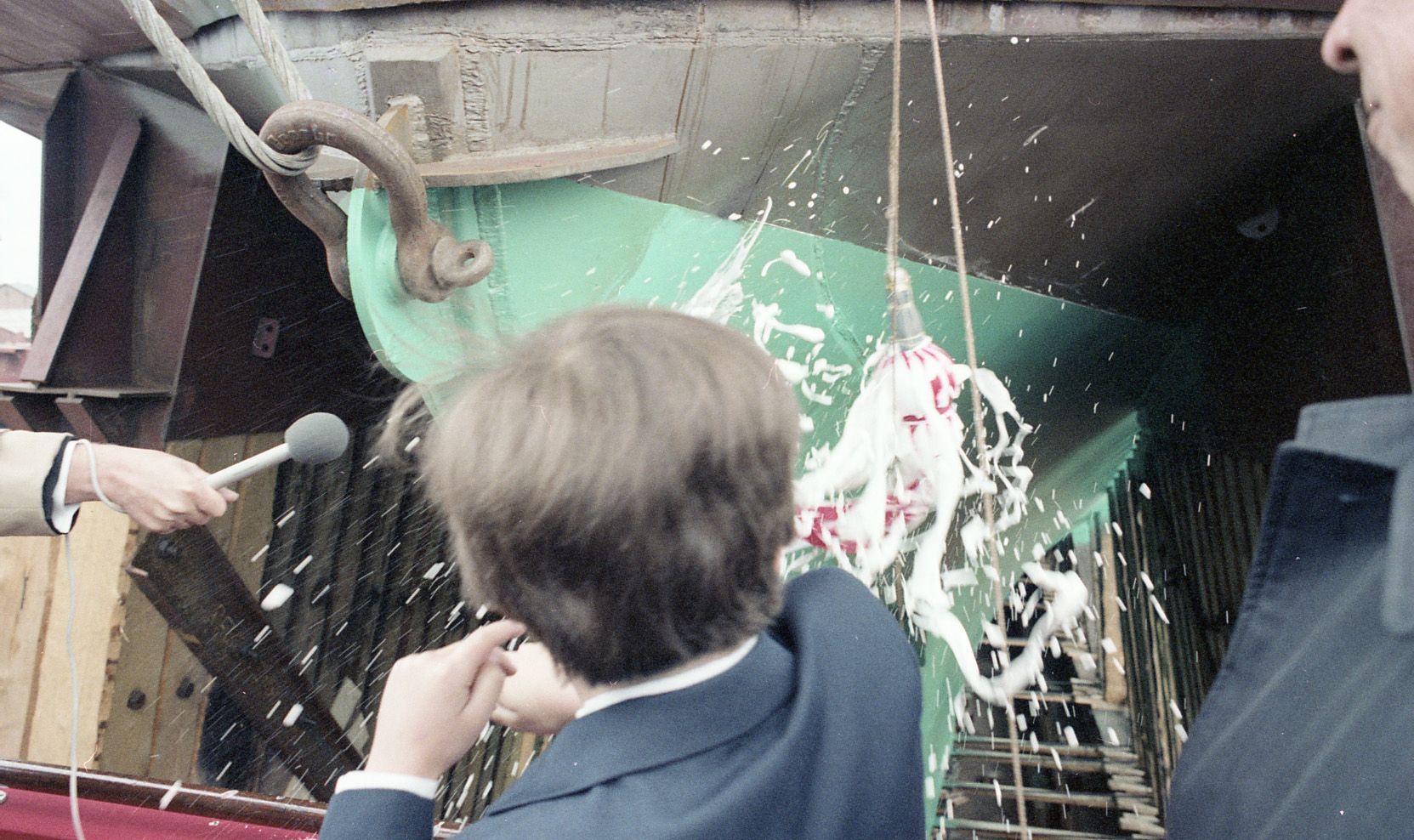
©Historiens Hus Nakskov
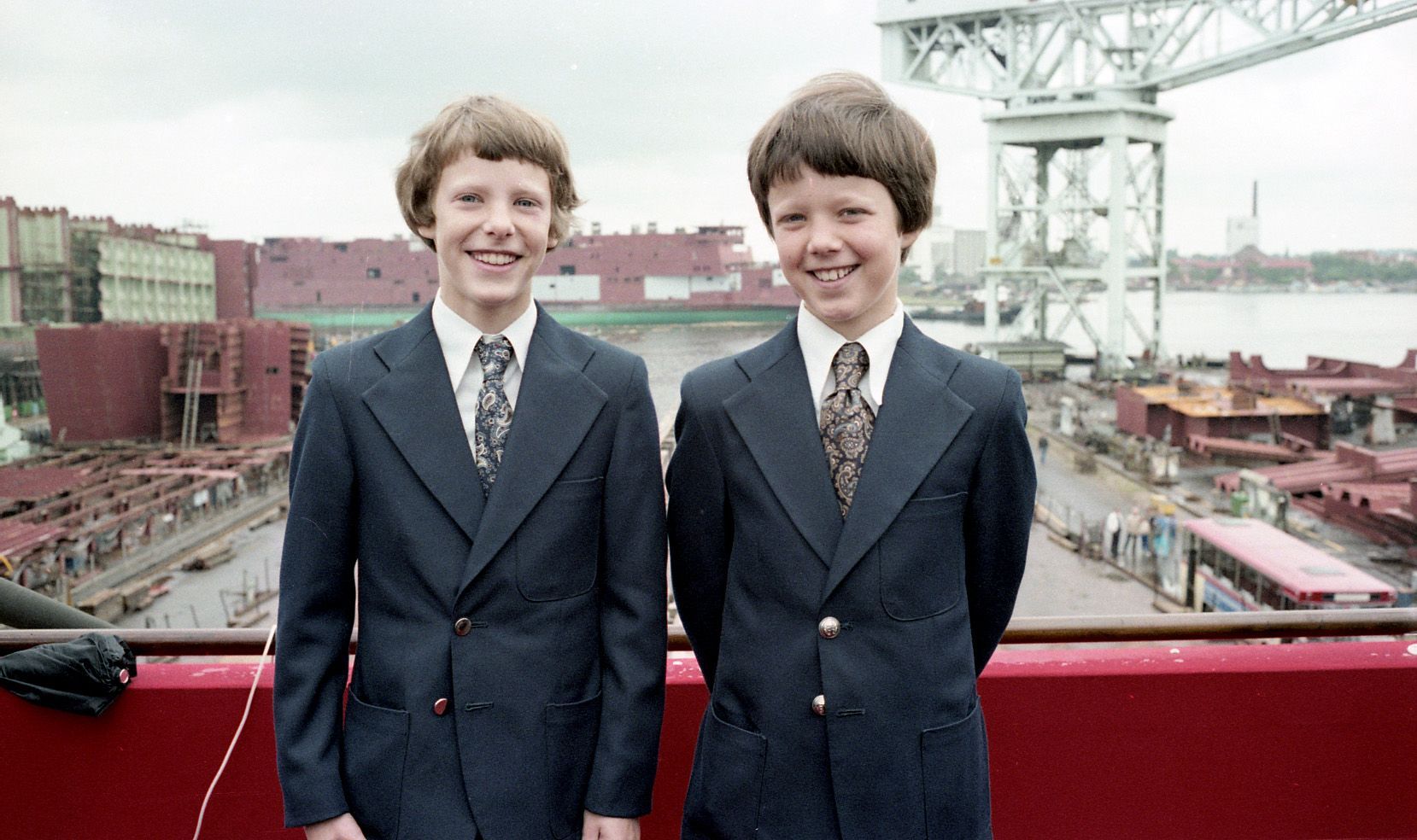
The naming of the two ferries was the first official act the two young princes, aged 11 and 12, performed as royals
©Historiens Hus Nakskov
M/F Prins Joachim was handed over to DSB in October 1980, and M/F Kronprins Frederik in April 1981. The ferries sailed as intercity railway ferries on the Great Belt between Korsør and Nyborg. The ferries could carry 60 railway wagons. There was space for 2000 passengers.
©Historiens Hus Nakskov
When the railway part of the Great Belt connection opened in 1997, the ferries were taken out of service. In 1998, M/F Kronprins Frederik was converted at Nakskov Shipyard into a car ferry. It could carry 210 cars, 38 trucks, or 42 buses, and had space for 1400 passengers. M/F Prins Joachim was laid up in Nakskov for a few years and then in 2000 converted like M/F Kronprins Frederik, but at Fredericia Shipyard.
Both M/F Kronprins Frederik and M/F Prins Joachim were deployed on the Gedser-Rostock route across the Baltic Sea.
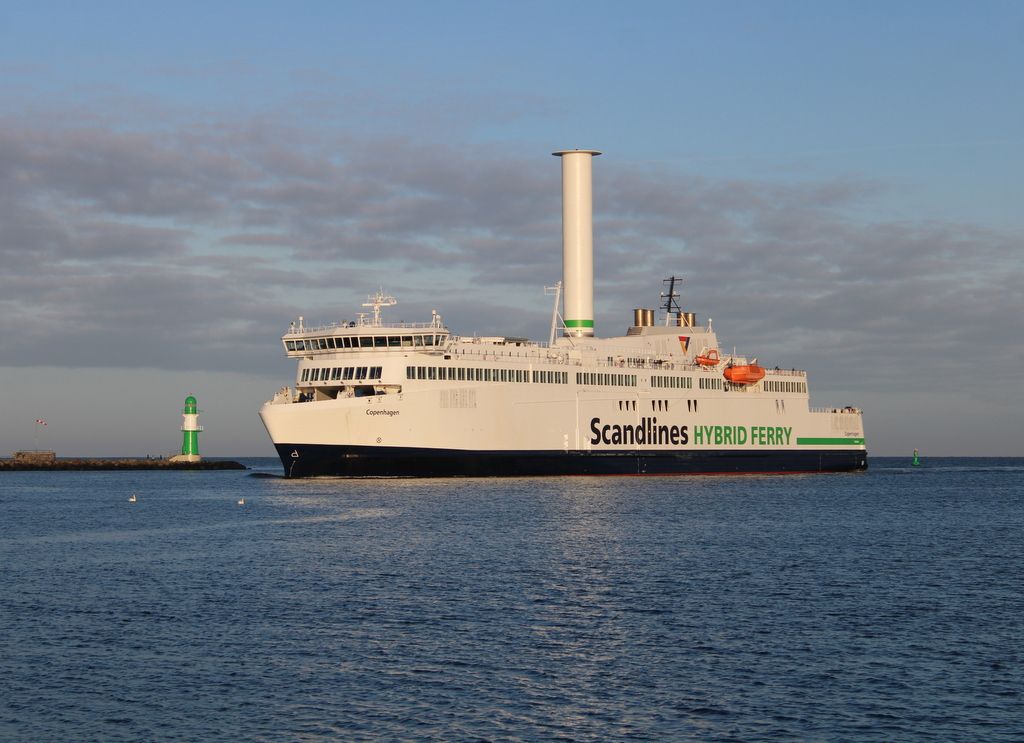
After the introduction of the hybrid ferry Copenhagen on the Gedser-Rostock route in 2016, M/F Kronprins Frederik was modified with new stern ramps to dock at Puttgarden. The ferry now sails as a truck ferry on the Rødby-Puttgarden route.
M/F Prins Joachim was sold in 2016 to European Seaways to sail in Greece and renamed Prince. The ferry was converted, adding 200 berths. Later in 2016, the ferry was sold to Africa Morocco Links and renamed Morocco Star, and sails between Morocco and Spain.
The sister ferry M/F Dronning Ingrid sails as a hospital ship in Africa under the name Africa Mercy.
19.6. Allan Dan Petersen – Able Seaman
©Historiens Hus Nakskov
I trained as a machine operator at Nakskov Shipyard. I worked as a blacksmith and shipbuilder at the shipyard. When the shipyard closed, I worked as a Precision Mechanic at Ortofon. Then I worked with welding inspection at Poul Ree and C.E. Andersen. There was more and more paperwork, which is not my thing, so I got a job on the Gedser-Rostock ferry.
To sail on the ferry, I had to take a 10-week course in Frederikshavn, then I became an Able Seaman. First, I sailed on M/F Kronprins Frederik, which I had helped to build myself. Then on the ferry Copenhagen.
We get along well; sailors are accommodating people, used to living close together on ships for long periods. On board, there are two men on the bridge and two on deck. During the day, there are also two men in the engine room. At night, the Chief Officer on the bridge also handles the engine room. There are 4 Able Seamen on board at a time, 2 are on duty, and the other two are off duty. My shifts are from 3:30-12 on duty, 12-16 off duty, 16-19:30 on duty, 19:30-3:30 sleep on the ship. When we are off duty, we are still part of the safety crew, so if an accident happens, we step in.
I work 3 or 4 days at a time. 4 days on the ferry – 7 days off – 4 days on the ferry – 3 days off – 4 days on the ferry – 7 days off – 3 days on the ferry.
Although we sail back and forth on the same route, I don’t find it boring. There is plenty of maintenance work, doors that are broken, toilets that don’t work. Every time we are in port, I load and unload. We can carry 94 trucks or about 400 cars. We have 15 minutes to get everyone off the ferry and load the new passengers on.
We are all trained in first aid, and everyone is a Smoke Diver, and every time we board, we check all the safety equipment. On ships, the Chief Officer is always the “Doctor”. We sail with many passengers, and serious accidents or acute illnesses, such as cardiac arrest, happen on board. When it has happened, there has always been a doctor or nurse among the passengers who could step in. When something like that happens, we always sail to the nearest port.
I should mention that the pay is good! Sailors in the Danish International Ship Register receive net pay, which is not taxed. The shipping company saves an amount equivalent to the tax, making it possible to employ Danes instead of cheaper foreigners.
©Stefan Pavel
20. Navigation
20.1. Navigation
Where are you?
Where are you going?
Are there other ships you could collide with?
Sextant – Determines the ship’s position
You are in the middle of the Atlantic Ocean – or the even larger Pacific Ocean. The ship holds a fixed course, but ocean currents pull on the ship and change its position. So where exactly are you?
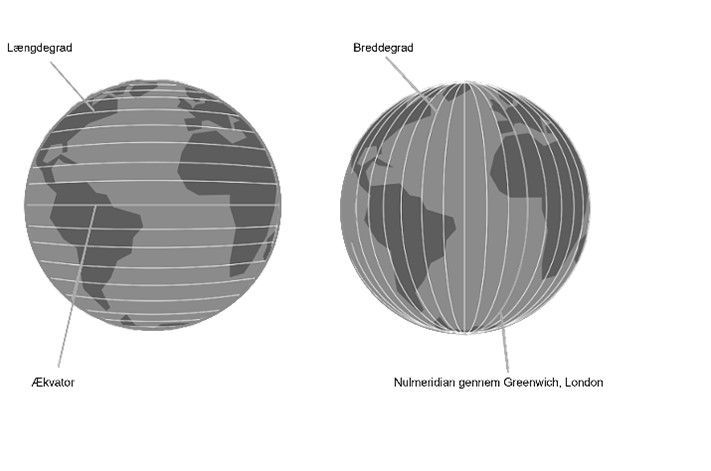
Longitude can be fairly easily determined from the time of sunrise. It requires an accurate clock and a table of sunrise times at different longitudes.
©Anna Arnecke
It is harder to determine latitude. Here you will need a sextant. It is an angle measuring instrument used to measure the angle between the visible horizon and a celestial body. This angle is called the altitude of the celestial body.
You can measure the sun’s altitude at noon or the North Star’s altitude at night. You also need to know the exact time, and then you can look up in a table the altitudes of celestial bodies at different latitudes.
Compass – Sets the course
The compass has been used for over 500 years. The magnetic compass contains magnetic iron, which aligns itself north-south according to the Earth’s magnetic field. The compass therefore points to the magnetic North Pole. The magnetic North Pole moves slightly as the Earth’s magnetic field changes. Therefore, the magnetic North Pole is not the same as the geographic North Pole, and deviations must be taken into account when using the compass for navigation.
The officer looks at sea charts and calculates the route the ship should sail. The course is given to the helmsman, who can set it up with wooden blocks, so there is no doubt in the sleepy hours of the night watch. The helmsman checks the course on the compass.
At night on the bridge, there should be as little light as possible so you can see out and keep an eye on ships, icebergs, and rocks which you might risk colliding with. Therefore, the compass can be placed in a “night house”, where it is shielded, so that only the compass is illuminated.
20.2. Radar – Sees other ships
Radar is used to observe the ship traffic near your own ship to avoid colliding with another ship. Radar stands for “radio detection and ranging”.
The radar antenna emits high-frequency (1-40 GHz) radio waves in one direction. If the radar beam hits a ship, a small part of the beam is reflected back, and the antenna picks it up. The received signal is converted into a “blip” on the screen in the radar console. The antenna rotates and scans the entire area around the ship. Radar can see in the dark and bad weather.
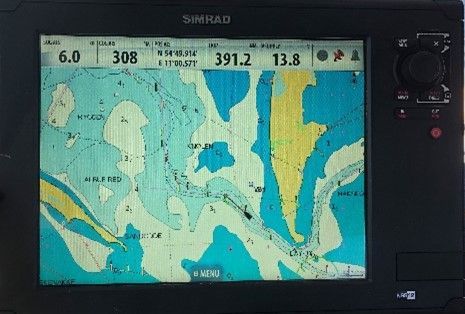
This radar console is from the motor ferry Danmark. You can see a similar radar in the picture of the bridge of M/F Dronning Margrethe II. The radar here at the museum does not work, as it is in the middle of a town and is not connected to a radar antenna – instead, a sea chart is embedded in the radar.
©Anna Arnecke
20.3. Global Positioning System – Determines the ship’s position and sets the course
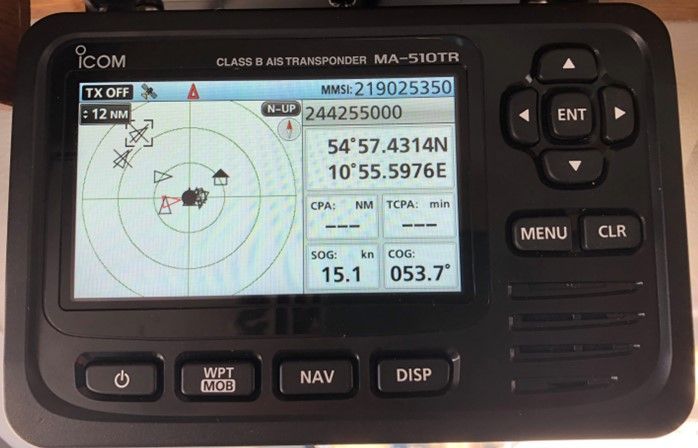
Today, all ships navigate using the GPS system. Satellites provide the precise position of where the ship is located. GPS signals are fed into a chart plotter so you can see your position on a sea chart and enter a route.
©Anna Arnecke
AIS – Automatic identification system – Sees other ships
AIS are small transponders on ships that use VHF radio signals to transmit the ship’s position and its MMSI (Maritime Mobile Service Identity) identification number, so others can see which ship it is, and its course and speed.
The international convention for the Safety of Life at Sea (SOLAS) requires commercial ships to have AIS. But since military vessels do not sail with AIS, pleasure boats do not need AIS, and Russian ships often turn theirs off, there is still a risk of collision.
21. Outro
“THE END”
– or a new beginning
Now they are once again enlarging and straightening the navigation channel into Nakskov, so that even larger ships can navigate the turns and sail into the town to load wind turbine wings. On the shipyard grounds, Vestas is now located – thus life goes on in our harbour town.
The question remains whether the adventure and distant shores are still part of the magic of the ship. “I have a bearing,” says a certain Capt. Jack Sparrow, holding his compass – right now, it probably points towards “Havneknejpen”, where you are welcome!
22. Thanks and Dedications
Exhibition
Idea and concept: Anna Arnecke
Design: Anna Arnecke
Content: Anna Arnecke
Dramaturgical consultant: Pernille Elimar
Construction of exhibition walls with ship’s bow: FGU students
Other museum construction: The museum’s volunteers
Text and graphics: Anna Arnecke
Image material: Nakskov Shipyard Image Collection, Local History Archive Nakskov
Sponsors
A.P. Møller og Hustru Chastine Mc-Kinney Møllers Fond til almene Formaal
Det Østasiatiske Kompagnis Almennyttige Fond